State Water Project

CALIFORNIA STATE WATER PROJECT

The State Water Project has helped
fuel the economic growth of California.  But that economic growth will suffer as
jobs are lost and expenses increase due to the lack of a reliable water
supply.

The SWP’s main purposes are to provide water storage and delivery. Its
supply comes mainly from rainfall, snowmelt runoff, and excess flows in the
Delta during wet years.

SWP water is delivered to contracting agencies in Northern California, the San Francisco Bay
area, the Central Coast, San Joaquin
Valley, and Southern
California
. The water supplements surface and groundwater
resources for most of these agencies.

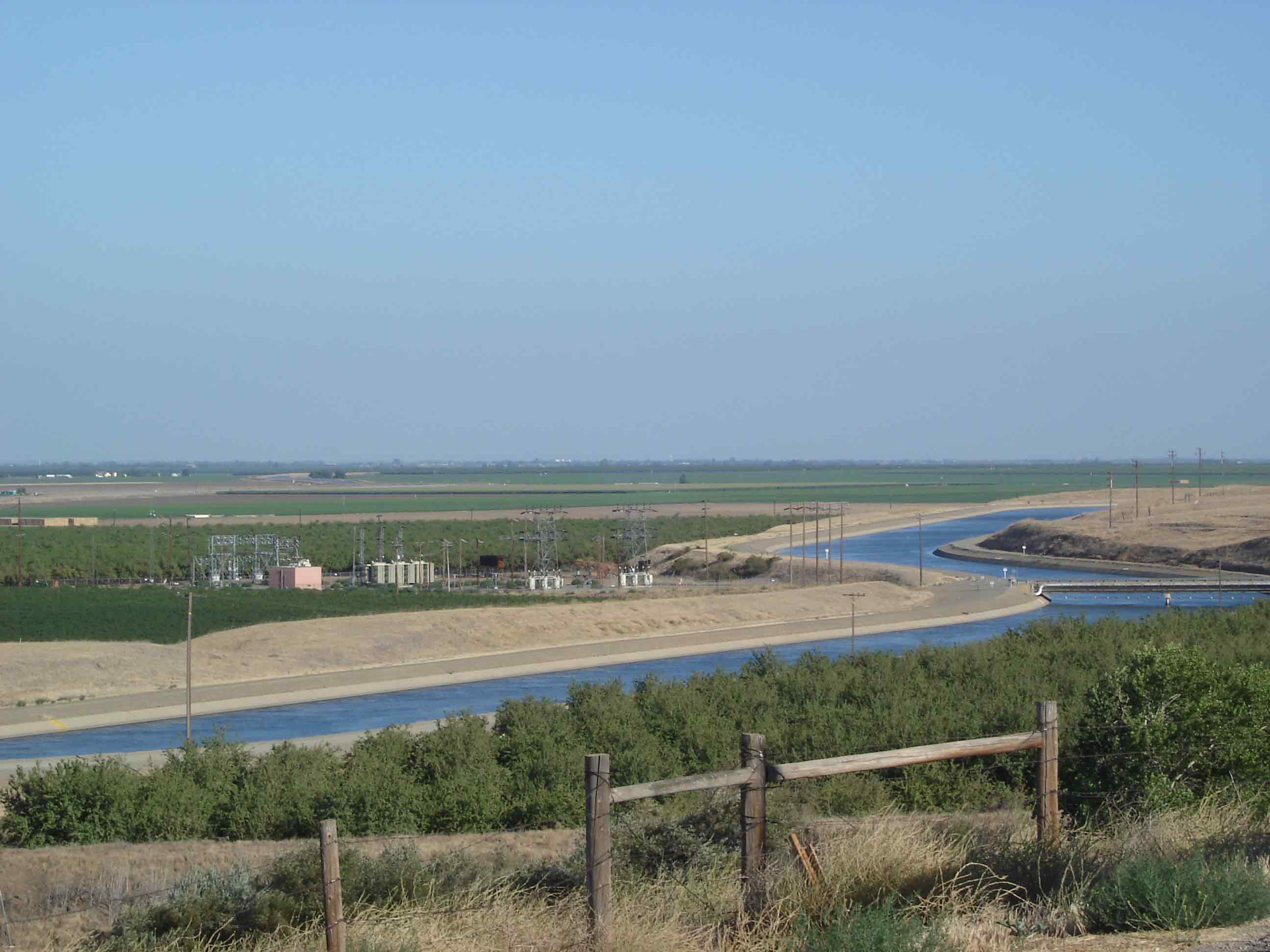
swp.jpgThe California
State Water Project is a water storage and delivery system of reservoirs,
aqueducts, powerplants and pumping plants. Its main purpose is to store water
and distribute it to 29 urban and agricultural water suppliers in Northern
California, the San Francisco Bay Area, the San
Joaquin
Valley, the Central Coast,
and Southern California. Of the contracted
water supply, 70 percent goes to urban users and 30 percent goes to
agricultural users.

The Project makes deliveries to two-thirds of California‘s population. It is maintained
and operated by the California Department of Water Resources.

The Project is also operated to improve water quality in the Delta, control
Feather River flood waters, provide
recreation, and enhance fish and wildlife.

Size

Today, the Project includes 32 storage facilities, reservoirs and lakes; 17
pumping plants; 3 pumping-generating plants; 5 hydroelectric power plants; and
about 660 miles of open canals and pipelines.

The Project provides supplemental water to approximately 20 million
Californians and about 660,000 acres of irrigated farmland.

Source: 
California Department of Water Resources


Additional benefits:

Power

Flood Control                                        

Fish and Wildlife Protection

Recreation

CFWC radio ads hit the airwaves

From October 7 through November 23, California residents will be hearing about farm water and the need to fix the state’s ailing water supply system.  The 30 and 60-second ads discuss the current water supply shortage as well as the legal and regulatory causes behind this year’s round of cuts that indled over 100,000 acres of farmland.

Agriculture is an important part of our economy and culture and when supplies are short, whether it’s because of a regulatory or natural drought, people lose their jobs and the economy of the state suffers.

Contact your elected representatives in Sacramento and Washington, DC and tell tham to fix California’s broken water supply system.  We need new reservoirs and a better way to move water through the Delta that protects water users and the farms that grow our food.

Listen to the CFWC radio ad here:

cfwc radio 2008 sc 60 final_1-2

Quagga Mussels – ‘Musseling’ their way into our waterways

My family enjoys it when I pull the boat out and we travel to a nearby lake for a day of relaxation and water skiing.  But these types of outings by boat owners are causing a very serious problem to California’s water supply system.

Quagga mussels—sounds like a villainous creature from a late-night horror flick—are now invading our waterways after a relaxing cruise from their home in the Ukraine.  They visited the Great Lakes before showing up in Lake Mead on the Colorado River and then crossed the border to various Southern California waterways.

These one-inch in diameter mollusks breed at a rapid pace.  A single adult quagga mussel releases as many as 10,000 larvae at a time, up to 1 million in a single reproductive season.  They attach themselves to one another and create a wall of mussels that can block water flowing through delivery pipes, forcing water districts to spend extra dollars and man hours to keep their systems clear.  The mussels can also strip an area clean of vegetation that other species rely upon for a food supply.

Quagga mussels first showed up in the Great Lakes in the 1980s.  Researchers point to water ballast unloaded from visiting ships from Europe as the likely avenue of transport.  It was only a matter of time as they hitch hiked their way attached to the hulls of pleasure boats to other regions across the United States.

State agencies have banded together to block these mussels from gaining a permanent foothold in California.  State Food and Agriculture inspectors at entry points to California have increased their efforts to fully check any boats to verify they are not harboring the troublesome mussels.  Fish and Game officials have stepped up their surveillance at in-state lakes and reservoirs.  Boat owners have been warned to thoroughly give their boats a look-over before leaving or entering the water.

The Coachella Valley Water District is taking steps to block the mussels from entering its distribution system by daily adding chlorine into the Coachella Canal close to where it branches off from the All American Canal.  We should all hope that the district’s efforts will provide a blueprint on how to stop the march of the mussels.

Meanwhile, you can be assured that I will keep an eye out for any unwanted hitchhikers when my family goes boating.

By Mike Wade, Executive Director

California Farm Water Coalition

Land fallowing and retirement

Peter Gleick of the Pacific Institute, on the Capitol Public Radio Show "Insight," today (Thursday, September 25, 2008) denied that land fallowing is a recommendation in their new advocacy report "More with Less."  When questioned about the language in the report advocating large-scale land fallowing in the San Joaquin Valley, Gleick seemed to bristle and said the report doesn’t recommend that.

However, on page seven of the Executive Summary the report states, "Planned short-term fallowing of 10% of the field crop acreage would save 1.7 million acre-feet of water and provide revenue for capital and other needed improvements.  Furthermore, permanently retiring 1.3 million acres of drainage impaired lands in the San Joaquin Valley would save 3.9 million acre-feet of water per year, while also reducing clean-up costs and minimizing the social and environmental impacts associated with polluted surface and groundwater."

Listen to the clip here:   (40 sec., 776k)

Later in the full body of the report, pages 39 and 40 repeat much of the same language except the numbers are higher, suggesting that 1.5 million acres of permanent land retirement would save 4.6 million acre-feet of water per year.

To put that impact into perspective, water shortages this year led to fallowing of more than 100,000 acres and the loss of over 1,000 full-time jobs.  "More with Less" suggests retirement of many more times that number of acres and says any job losses and local community impacts from land fallowing or retirement should be "mitigated," but it doesn’t say how.

Meanhile, innovative farmers have found ways to farm those lands profitably, reducing or eliminating impacts on soil productivity and keeping productive lands growing food for consumers around the world.

The report does contain sensible recommendations for public investment in items such as improved irrigation technology, something many farmers currently find unaffordable.  CFWC acknowlegdes these financial barriers and supports efforts to bridge that gap.

Listen to the full program here: (12 min., 14.5mb)

Audio clips from the program "Insight" provided with permission from Capitol Public Radio/KXJZ.

http://www.capradio.org/

IMAGINE

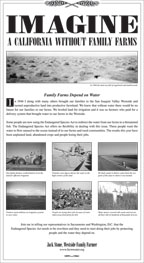
imagine ad 9-16-08sm.jpgImagine a California without family farms.  It’s an inconceivable thought but that’s what could happen if water continues to be stripped from farms and the people who work the land.


It is going to take comprehensive reform by the State Legialature and
Congress to get the changes needed to protect the future of
agriculture.  The California Farm Water Coalition is undertaking a comprehensive public education effort from Sacramento to the San Francisco Bay Area to the Central Valley and Southern California to inform consumers and public officials about the need for adequate and dependable water supplies for California’s farms, homes and businesses.

Farm Water Tours

2008 Farm Water Leadership Tour
Sept. 17-19, 2008

Join the three-day tour through the San Joaquin Valley and visit with farmers and water district officials.
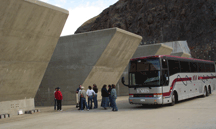
fuse-gates.gifTour participants visit the fuse gates at Lake Kaweah.

The tour begins and ends in Stockton with overnight stops in Los Banos and Bakersfield.  This is your opportunity to ask farmers "why" they use water like they do.  Hotels, meals and transportation during the tour are included in the cost:
$475 single occupancy
$395 per person double occupancy

Confirm your reservations today by calling the

California Farm Water Coalition
(916) 391-5030, or email to
mhenry@farmwater.org

Click to view tentative agenda


Tentative Agenda
2008 Farm Water Leadership Tour
Sept. 17-19, 2008

Day One – Wednesday, Sept. 17, 2008

8:00 a.m.               Meet in Stockton at   

San Joaquin Farm Bureau

3290 North Ad Art Road

Stockton, CA  95215

(209) 931-4931

                                Introductory briefing by Mike Wade

                                                Why the Delta is so important  

9:00 a.m.               Board bus for driving tour through the Delta

                                Delta farmer perspective by Jerry Robinson

9:30 a.m                Hwy 4—Jones Tract levee repairs

9:50 a.m.               Depart Jones Tract

10:00 a.m.            Arrive DWR Rock Barriers at Grant Line Canal & Tracy Blvd.

                                                Mark Holderman, Supervising Engineer,

South Delta Branch, DWR

10:30 a.m.            Depart DWR Rock Barriers

11:00 a.m.            Arrive C.W. “Bill” Jones Pumping Plant 

                                                Facility briefing and tour —

   Steve Larsen

   Manager, Plant Engineering & Maintenance

   San Luis & Delta Mendota Water Authority

                                Lunch  

1:00 p.m.               Depart Jones Pumping Plant

1:15 p.m.               Arrive Federal Fish Screens

2:00 p.m.               Depart Federal Fish Screens

                                Speaker on bus

3:30 p.m.               Arrive San Luis Reservoir

Dan Nelson—Executive Director

           San Luis & Delta Mendota Water Authority

Analysis of court decision to restrict water flowing from the Delta

4:00 p.m.               Depart San Luis Reservoir…driving tour to motel

                                Dennis Falaschi, Panoche Water District general manager

                                                Recycling of drainage water

5:45 p.m.               Arrive Los Banos

                                Overnight at the Vagabond Inn Executive Motel

615 p.m.                Depart for dinner at Delta Party Barn

6:30 p.m.               Arrive Delta Party Barn

BBQ dinner and program—

Speaker to be determined

Board members from local water districts invited

8:30 p.m.               Depart for motel

Day Two – Thursday, Sept. 18, 2008
Continental breakfast at the motel

7:30 a.m.               Depart Los Banos

8:30 a.m.               Arrive Stamoules Produce                                                Computerized irrigation system

                                                Chuck Dees, Irrigation Manager

10:00 a.m.            Depart Stamoules Farms

10:20 a.m.            Arrive Mendota Pool

                                                Presentation by Exchange Contractors representative

10:45 a.m.            Depart Mendota Pool

                                                Speaker on bus

12:15 a.m.            Arrive Friant Dam

                                                Lunch

New Storage at Upper Temperance

                                                Ron Jacobsma

Friant Water Users Authority

1:30 p.m.               Depart Friant Dam

3:00 p.m.               Arrive Lake Kaweah/Terminus Dam

Presentation:  Flood Control/Fusegates

By Kaweah Delta Water Conservation District

4:00 p.m.               Depart Lake Kaweah

5:30 p.m.               Arrive Fernandes Dairy, Tipton

                                                View carousel milking parlor; water control measures

6:15 p.m.               Depart Fernandes Dairy

6:30 p.m.               Arrive Lower Tule River Irrigation District, Tipton

                                                Water for ag and the environment

                                                Dan Vink, LTRID General Manager

8:00 p.m.               Depart Lower Tule River Irrigation District

8:45 p.m.               Arrive Wyndham Garden Hotel, Bakersfield


Day Three – Friday, Sept. 19, 2008


7:35 a.m.               Depart Wyndham Garden Hotel

7:45 a.m.               Breakfast at Kern County Water Agency

                                                Briefing of issues by Jim Beck, General Manager

8:45 a.m.               Depart Kern County Water Agency with Kern Water Bank spokesperson on bus

9:20 a.m.               Arrive Kern Water Bank for driving tour

10:45 a.m.            Depart Kern Water Bank 

12:00 p.m.            Arrive Harris Ranch Restaurant

                                                Lunch

                                                Westlands Water District briefing

1:00 p.m.               Depart Harris Ranch Restaurant

                                                Driving tour of Westlands

4:00 p.m.               Arrive San Joaquin Farm Bureau, Stockton


Overview of Central Valley Project Contract Renewals

Quick Facts

§        
Critics of California’s farmers are challenging a
U.S. Bureau of Reclamation requirement to renew 231 water
contracts for water districts, farmers and cities served by the
Central Valley Project (CVP). If successful, the disruption of
this process could lead to dramatic impacts in California’s
water supply, its economy and environment.

§        
California farmers produce more than half the
nation’s fruits, nuts and vegetables, generate approximately $28
billion in gross receipts annually and employ 1.1 million
people. These activities create $60 billion in economic activity
through transportation, packaging, equipment sales, wholesale,
service industries and other businesses that depend on
California farms for their livelihood.

§        
One third of California’s farmland – roughly three
million acres – relies on the CVP for critical water supplies. 
The CVP also furnishes municipal and
industrial water for about one million households and generates
clean hydroelectricity to meet the needs of about 2 million
Californians.

§        
The CVP delivers more
than 800,000 acre feet of water each year to fish and wildlife
protection and habitat restoration and provides 410,00 acre feet
to state and federal wildlife refuges and wetlands.

§        
As required by federal
statute, the U.S. Bureau of Reclamation, which manages the CVP,
has executed or is renegotiating new long-term contracts for CVP
water supply with water districts, cities and farmers throughout
California.

§        
Reclamation conducted a thorough environmental
analysis of the proposed contracts, beginning in 1993 with a
Programmatic Environmental Impact Statement and more recently
with Endangered Species Act consultations with state and federal
agencies.  The agency also conducted detailed water needs
assessments for every CVP contract before determining the amount
of water deliveries incorporated into new agreements.

§        
Water rates in the new CVP contracts are set by
federal statutes:  The Reclamation Reform Act of 1982 and
Central Valley Project Improvement Act of 1992.  The
contracts require that rates be based on full repayment of
project costs by 2030.

§        
Settlement Contracts were predicated on an
exhaustive analysis of historic water use for each settlement
contractor.  Challenging these settlement quantities would
undermine Sacramento River water allocations and cause a need
for Sacramento River water basin adjudication.  This would
result in chaos and disputes over water that would last for
decades and would disrupt urban and agricultural water plans.

§        
State and federal policies create incentives that
encourage voluntary water transfers.  Farmer-to-farmer
water transfers, or transfers between farmers and cities,
provide important flexibility to address shortages through
voluntary market mechanisms.  The CVPIA, championed by
Senator Bill Bradley and Congressman George Miller, encouraged
the use of water transfers.

Myths and Facts about CVP Water Contracts

How much do farmers pay for water?  Is agriculture
still important to the State’s economy?  Does farm
water use harm the environment?  Find the answers
to these and other questions about farm water.

How much do farmers pay for water? Is agriculture still important to the State’s economy? Does farm water use harm the environment? Find the answers below to these and other questions about Central Valley Project water.

The U.S. Bureau of Reclamation is in the process of renegotiating, or has concluded negotiations and executed, some 231 new water contracts for CVP water deliveries to California farms, cities and individuals. These contracts are the result of an environmental review and subsequent negotiations that have been underway since 1993 as required by the Central Valley Project Improvement Act (P.L. 102-575). The 190 negotiation sessions were publicly noticed, open and attended by members of the public and various advocacy groups.

There have been numerous false and misleading claims and allegations about the project, the contract process, federal law and farming in California. The following is an attempt to set the record straight.


Myth: New long-term CVP contracts will lock up a large portion of the state’s water supply for many years to come, impairing California’s ability to manage its water supplies in the future.
Fact: Continued dependable deliveries of water from the Central Valley Project to the farms and cities that rely on it will play a significant role in meeting California’s water needs in the future. The CVP supplies seven million acre feet of water – nearly 20 percent of California’s developed water supplies – to 3.4 million acres of farmland, more than 3 million people in more than 50 California cities, counties and rural communities. The CVP also supplies more than 1.5 million acre feet of water for fish and wildlife purposes.
Managing California’s water future will require a great deal of careful thought, creativity, collaboration and energy. Taking water away from one important economic sector – agriculture – and redirecting it to other uses is not an appropriate or effective water management strategy.
   
Myth: Because of agriculture’s declining relative share of the state’s economy, CVP water supplies could be better utilized by being directed away from farming and used instead by cities and environmental programs.
Fact: While farming’s relative share of the state’s economy has declined from its historic point, farming continues to play a vital role in the state’s and nation’s economy. California farmers produce more than half the nation’s fruits, nuts and vegetables, generate approximately $28 billion in gross receipts annually, employ 1.1 million people and create $60 billion in personal income each year. One third of the state’s farmlands depend on water from the CVP. Moreover, the relative inexpensive agricultural produce and grains produced in California helps to maintain affordable food costs for lower income Californians and state and federal assistance programs.
The farms and cities that receive CVP water have legitimate, documented needs for their CVP supplies.
   
Myth: Changes in agriculture and California demographics indicate agriculture will require less water in the future.
Fact: Farmers in California have become increasingly water-efficient, not because they need less water but because they find it increasingly difficult to obtain the water they need. Reductions in water deliveries to farms produces very predictable results – reduced yields, reduced farm income, increased farm failures, reduced sales of farm equipment and supplies and increased dislocation for farm workers and rural communities. These adverse financial impacts can create broader societal consequences. All indications are that, provided a reliable and adequate water supply, agriculture will continue to be a dynamic and important contributor to the state’s and nation’s economy.
Some critics of the CVP point to the Westlands Water District, which is in the process of reducing the number of acres in irrigated production, as an example of why CVP supplies to farmers should be reduced. For most of the past decade, Westlands and other water districts on the west side of the San Joaquin Valley have received only a fraction of their full CVP entitlement. To augment its limited CVP supplies, Westlands purchases or pumps an additional 400,000 to 500,000 acre feet of water each year. Thus, even after removing 100,000 acres from irrigated production, the 1.15 million acre feet Westlands is entitled to receive from Reclamation provides just 2.5 acre feet of water per acre, well below the average water used by California farm operations. Further, nothing in the new contracts assures the District it will receive 100 percent of its allocations in the future.
   
Myth: The use of CVP water by California farmers and cities harms California’s environment.
Fact: The use and allocation of CVP water supplies, including Sacramento River water rights settlement contractors and San Joaquin Exchange contractors whose water rights predate the CVP, is consistent with existing state and federal environmental law, regulation and policy. This includes the Endangered Species Act, Clean Water Act, elements of the Central Valley Project Improvement Act, California’s constitutional requirements of reasonable and beneficial use and many others.
Moreover, in the past decade, an unprecedented state and federal effort has resulted in one of the most comprehensive restoration programs in the United States designed to protect, restore and enhance fish and wildlife habitat throughout the CVP service area. These efforts include the annual dedication of more 1.3 million acre feet of water for fish and wildlife purposes, plus water supplies acquired for the CALFED Environmental Water Account, and a $50 million annual restoration fund for environmental purposes. To date, CVP contractors have contributed approximately $460 million to this fund.
Farmers in the CVP service area have also partnered with the U.S. Fish and Wildlife Service, the California Department of Fish and Game, and conservation groups such as the Nature Conservancy, Ducks Unlimited and the California Waterfowl Association to create and enhance habitat for waterfowl, shorebirds and other wildlife. And nearly all of the larger Sacramento River irrigation districts have installed state-of-the-art fish screens to protect young salmon and steelhead, including installation of a $76 million fish screen for the Glenn Colusa Irrigation District, the largest fish screen of its type in the world..
   
Myth: The Bureau of Reclamation did not provide adequate opportunities for public participation in the contract renewal process and have otherwise not complied with federal law.
Fact: Reclamation’s contract renewal process has been universally open to the public, other state and federal agencies and critics of California’s farmers. Ironically, many of today’s critics of Reclamation’s contracts participated in the development of the Central Valley Project Improvement Act which directed Reclamation to renew these contracts in the manner now being followed. Immediately after the CVPIA’s 1992 passage, Reclamation initiated a Programmatic Environmental Impact Statement (PEIS) on the new law, including the proposed renewal of its contracts. Reclamation held 190 public workshops in cities and communities throughout California and completed consultations required under the National Environmental Policy Act and the Endangered Species Act. All of these steps are designed to protect the public’s interest and their rights.
Representatives of the Natural Resources Defense Council, a leading critic of farming and the CVP contracts, attended many of these meetings and submitted extensive written comments to Reclamation on the proposed contracts.
   
Myth: CVP water is heavily subsidized and under priced and therefore encourages waste.
Fact: All farmers who receive water from the CVP are required to repay their share of the federal government’s cost to build, maintain and operate the CVP. Currently, irrigators are obligated to repay the government more than $1.1 billion to pay for the initial construction of the vast project. Farmers who comply with acreage limits required by Reclamation law are not required to pay interest on the debt – the only subsidy they receive. Farmers who do not meet Reclamation law requirements are required to pay the full cost of building the CVP, including interest.
New CVP contracts contain significant increases in water rates and are intended to result in repayment of all CVP capital costs by 2030.
While they can vary significantly from one region of the state to another, the costs of water to farmers has increased significantly in recent years. Increased water costs, and chronic reductions in CVP allocations, have resulted in major improvements in the efficient use of irrigation water.
   
Myth: New CVP contracts encourage water transfers, which allow farmers to profit.
Fact: New CVP contracts do indeed allow water users to transfer or sell CVP water on a voluntary basis. Voluntary water transfers are a very effective and important tool for water management in California, especially during times of water shortages. State and federal laws and policies encourage the use of voluntary water transfers. Environmental groups and Congressman George Miller also have, in the past, advocated development of voluntary water markets to help ration and allocate California’s water supplies.
   
Myth: New CVP contracts call for increased deliveries to farmers.
Fact: Not one of the 231 CVP contracts renewed or being negotiated calls for increased water deliveries. Critics of farming have made this claim based on the argument that during most of the past decade, many farmers in California received far less water than their contracts entitled them to receive, largely because of water quality and fishery regulations. New contracts call for the same amount of water and make no changes that would increase the likelihood farmers will see 100 percent of their water supplies any time soon.
   
Myth: The beneficiaries of CVP water are large corporate farming operations.
Fact: Very few, if any, of the farms that rely on CVP water are corporate farms. Reclamation law, which limits farming operations to 960 acres, makes it very difficult for large corporations to own and manage farms that receive CVP water.
According to the U.S. Department of Agriculture, only one percent of the 64,000 farms in California are owned by corporations. More than 80 percent of California farms are owned by individuals or individual families. Another 5.4 percent are owned by family corporations and 11.2 percent are owned by partnerships.
Farmers in California are no less family farmers than are farmers anywhere else in the world. Most live on or near their farm and work their fields on a daily basis. Some farming operations in California are quite large, in part because increasing water costs, the need for costly irrigation and cultivation technology, and global competition for farm commodities have made it necessary for farms to grow or die. Still, they are family farming operations in the truest sense of the word.

How You Can Help Support California’s Family Farmers

Learn what you can do to help support California’s historic and bountiful agriculture
industry.


Write a
letter today!

California family farmers need your help and support to
ensure that new contracts for water from the Central Valley
Project are renewed without delay.  You can provide
important help by writing a letter today to:


The Honorable Gale Norton
Secretary, United States Department of the Interior
1849 C Street, N.W.
Washington, DC 20240 

Tell Secretary Norton you support California family farms
and the important contribution they make to California’s
economy.  Tell Secretary Norton the Central Valley Project
is vital to the survival of family farms in California. 
Tell Secretary Norton you support her department’s efforts
to finalize new contracts for Central Valley Project water.


Sample Letter in Support of
CVP Contract Renewals

Current Date

The Honorable Gale Norton
Secretary
United States Department of the Interior
1849 C Street, N.W.
Washington, DC 20240

Dear Secretary Norton;

I
am writing to urge the Department of Interior to continue to
negotiate and renew long-term contracts with California
cities and farmers for CVP water and support those contracts
already executed.

The Central Valley Project has provided untold benefits to
the state as a whole, in increased tax revenues, the
development of vibrant rural communities throughout the
state, the creation of jobs, the success of cities and
industries and the production of clean, inexpensive
hydroelectric power.  California farmers have used CVP water
to create some of the most productive farmlands in the
world.  As a result, our state leads the nation in farm
production. 

Renewal of Central Valley Project contracts is consistent
with federal law and will continue a visionary compact that
was made some 50 years ago between the United States and
California’s cities, farmers, farm workers and small,
farm-based communities.

The process of negotiating new CVP contracts has been
lengthy, subject to a great deal of environmental review and
analysis, fair and open for all to see and participate in. 
Californians support their family farmers and appreciate the
Department of the Interior’s resolve to abide by the law and
renew long-term CVP contracts.    

Sincerely,

Your Name

Marcia Sablan

Firebaugh city councilwoman and family physician Marcia Sablan

[audio src="/images/stories/radio/sablan_commercial.mp3"]
It’s not uncommon for farmers and farm workers to sit shoulder-to-shoulder in the spacious waiting room of the Sablan Medical Clinic on Firebaugh’s main thoroughfare. Inside the bustling clinic, Dr. Marcia Sablan and her husband maintain a busy practice they started 24 years ago as newly minted physicians required to serve a rural community as part of a community service requirement.

Continue reading