The Critical Connection Between Farm Water and Our Food Supply

The California Farm Water Coalition has released two new fact sheets that provide valuable insights into the amount of water required to produce the food Californians consume on a daily basis. ​The fact sheets, titled “Where Does Farm Water Go?” ​ and “Sample Daily Menu,” highlight the significant role water plays on the farms that grow the food that people bring home to their families.

Continue reading

Sample Daily Menu

Daily Water - Sample Menu

How much water does it take to grow your food?

How much water is in the food you eat? Check out this sample daily menu and learn more about the water needed to grow the foods you enjoy!

Every meal requires water to produce, but California farmers are dedicated to efficiently producing more food with every gallon. Check out how California’s farms compare to our international trading partners.

Be sure to check out the water needed to bring us other every day items in our “Farm Water Cafe” factsheet.

A Better Alternative for Saving the Colorado River

As the lifeblood of the arid American Southwest, the Colorado River stands as both a symbol of vitality and a testament to the intricate balance between human necessity and environmental stewardship. Flowing through seven U.S. states and Mexico, its waters sustain over 40 million people, vast agricultural lands, tribal interests and a myriad of ecosystems.

Continue reading

Response to the L.A. Times – 1/17/24

Response to the L.A. Times - 1/17/24

An LA Times article on 1-17-24 regarding a state water-saving plan pursues an outdated line of thought that tries to pit urban water users against farms. The only way we adjust to water shortages and climate change is working together, not picking winners and losers. And that’s exactly what California farms have been doing.

According to the Public Policy Institute (PPIC) overall farm water use is down 15% since 1980 due to implementation of conservation measures and utilization of new technology. In addition, California farmers have pioneered urban-rural partnerships which have led to hundreds of thousands of acre-feet of water being shifted from farms to California families, taking pressure off the entire system.

And let’s not forget that farms are not the end users of water, consumers are. The water sent to farms is used to grow food, protecting our safe, affordable, domestic food supply.

Farm Water Cafe

From our dinner to our data centers, everything has a water footprint. Find out more about how much water it takes to grow our food or charge our cars with this infographic. 

Continue reading

Coping With Weather Whiplash – Improving S2S Precipitation Forecasting

Guest Post by Jeanine Jones, Interstate Resources Manager, California Department of Water Resources

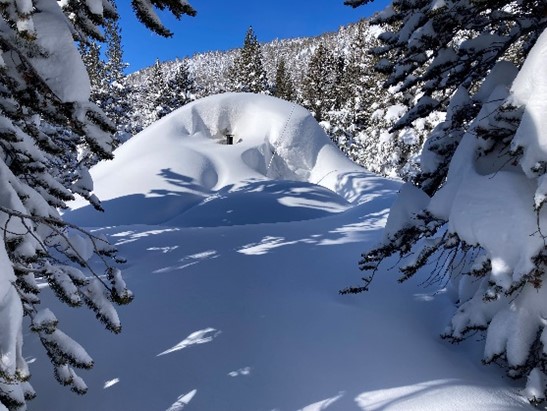
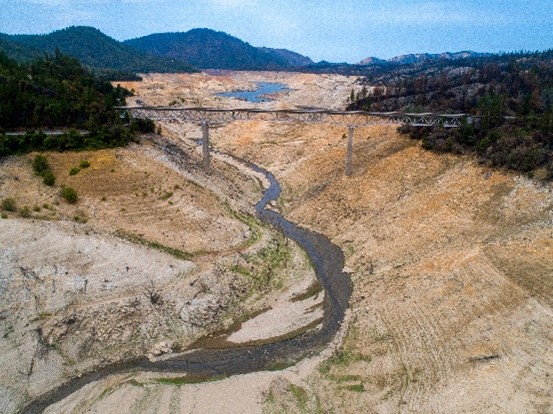
Water Year 2023 was notable for ending the 2020 – 2022 drought, California’s driest consecutive three-year period, with one of the state’s snowiest years. This rapid change in water supply conditions was not predicted by the National Weather Service (NWS), reflecting the difficulty of forecasting precipitation outcomes at time scales longer than a weather forecast (at most, ten days to two weeks).

Subseasonal to seasonal forecasts, or S2S (forecasts extending from two weeks to a year or more) would be hugely useful for managing the extremes of floods and droughts if the forecasts were skillful. The NWS has been issuing S2S outlooks since the mid-1990s, but the outlooks cannot be used for water management decision-making because their skill is too low. S2S forecasting is scientifically challenging and requires investment in research. 

Congress has begun work on reauthorization of the Weather Research and Forecasting Innovation Act (Public Law 115-25).  H.R. 6093 was reported by the House Committee on Science, Space, and Technology in December; the Senate has not yet introduced its reauthorization bill. The 2017 Act had required the National Oceanic and Atmospheric Administration (NOAA) to improve S2S forecasting, and NOAA had submitted a report to Congress on needed actions as required by the Act. Subsequently NOAA did not implement the pilot project for improving western U.S. precipitation forecasting for water management it had recommended in its report to Congress and did not seek funding for the project in the federal budget process. H.R. 6093 would specifically require NOAA to implement the western pilot and would authorize sufficient funding for the effort.   

Seed money research forecasting projects funded by the Department of Water Resources (DWR) have illuminated reasons why NWS outlooks have been unsuccessful (over-reliance on El Niño – Southern Oscillation conditions (ENSO), for example) and pointed out potential statistical modeling approaches for improving forecasts made with complex dynamical weather or climate models. A recent blog post from the Public Policy Institute of California (https://www.ppic.org/blog/seasonal-weather-predictions-are-elusive-in-california/) highlighted DWR-funded research about ENSO’s limited role in affecting California precipitation. ENSO status is presently a prime indicator the NWS uses in its preparation of precipitation outlooks. Modifying the dynamical models used by NWS and improving its precipitation forecasting requires sustained commitment of federal resources.

More information about improving S2S forecasting is available on the S2S Precipitation Forecasting Coalition website at https://www.s2sforecasting.org/

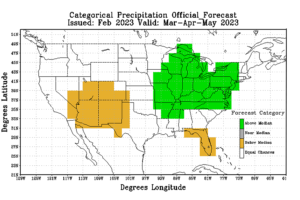
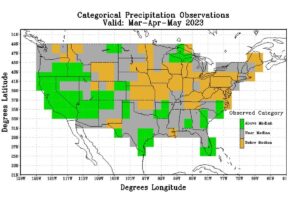
Water Year 2023 – NWS Seasonal Precipitation Outlook Compared to Observed Precipitation

What is S2S?


Subseasonal to seasonal (S2S) forecasts are forecasts that extend beyond a short-term weather forecast (forecasts made 10 days to two weeks in advance). The Weather Research and Forecasting Innovation Act (Public Law 115-25), defines subseasonal as two weeks to three months and seasonal as three months to two years.

Comment Letter – Sacramento/Delta Draft Staff Report

Comment Letter – Sacramento/Delta Draft Staff Report

 
Dear Chair Esquivel and Board Members:

I am writing on behalf of the members of the California Farm Water Coalition (Coalition) to express our support for the alternative proposal, the “Agreements to Support Healthy Rivers and Landscapes,” to the SWRCB staff recommendation for unimpaired flows. This alternative is a more promising avenue for achieving a balanced and sustainable water management strategy for California.

First, we support the emphasis on collaboration over regulation in these agreements. Unlike the more rigid mandates proposed by the Board’s staff, these agreements encourage stakeholders to work together, fostering shared responsibility. This approach promotes inclusivity and cooperation, providing a platform for finding solutions that meet both environmental needs and the requirements of the agricultural sector.

Second, the focus on innovation and investment in water infrastructure is noteworthy. Active participation in decision-making encourages participants, including farmers and environmental advocates, to invest in modern and efficient water technologies. This collaborative approach stimulates the development and implementation of cutting-edge solutions, enhancing water use efficiency and minimizing environmental impact. Third, the path outlined in these agreements allows for adaptive management, acknowledging the dynamic nature of California’s water needs influenced by factors such as climate uncertainties and population growth. The flexibility to adjust strategies in response to evolving conditions ensures that water management practices remain effective in the face of changing circumstances, contributing to long-term sustainability and resilience.

Moreover, the recognition of local expertise in the Agreements to Support Healthy Rivers and Landscapes is commendable. Leveraging the unique insights of communities and industries across California enables the development of region-specific strategies, fostering a more nuanced and effective approach to water management.

While the Coalition acknowledges the State Water Resources Control Board staff’s recommendation for minimum flow standards aims to address significant challenges, we believe that the Agreements to Support Healthy Rivers and Landscapes present a more holistic and promising option. Through collaboration, adaptability, innovation, and local engagement, this path respects the diverse needs of California’s communities and ecosystems. It is our sincere hope that the Board considers these comments in the pursuit of sustainable water management for the Golden State.

The Coalition appreciates the Water Board’s diligence and attention to this critical matter. It is clear that a one-size fits all strategy is not the answer to California’s diverse water supply and ecosystem challenges. With many examples of successful collaborative efforts by public water agencies, farmers, State and federal agencies, and members of the conservation community, we urge the Board to adopt the Agreements to Support Healthy Rivers and Landscapes option. It is faster, smarter, and will be more effective than a flows-only alternative.


Thank you for the opportunity to submit our comments.

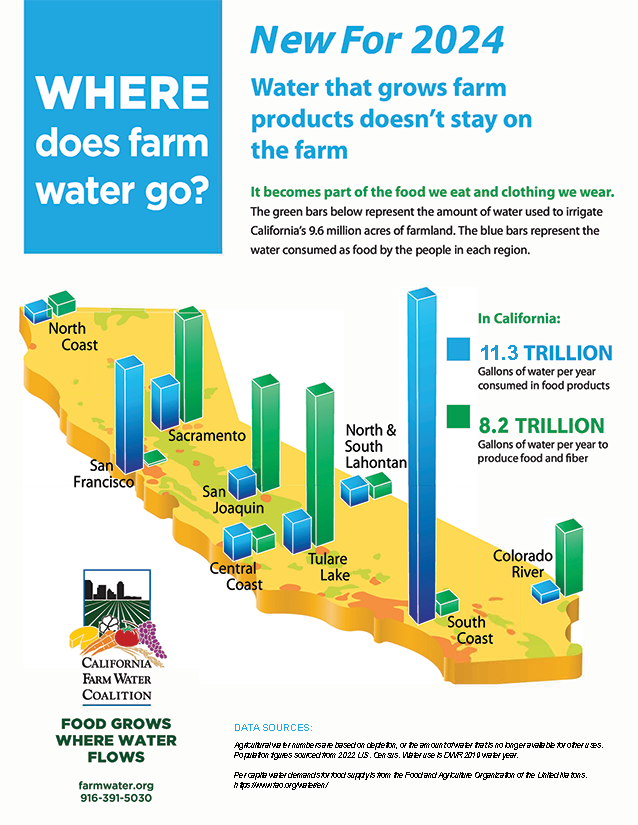
Where Does Farm Water Go?

Water used to grow farm products doesn't stay on the farm.

It becomes part of the food we eat and the clothing we wear. 


California is a net importer of the water needed to feed and clothe our population. 

STATEMENT: The Sacramento Valley Shows There’s a Better Way to Manage Water

STATEMENT: The Sacramento Valley Shows There’s a Better Way to Manage Water

October 1 marked the beginning of the new water year in California. And while 2023 provided an abundant amount of water, anyone who lives here knows we can’t assume 2024 will be the same. In fact, the only thing we know for certain is that our water supply is utterly unpredictable. California’s droughts and floods have always been cyclical but it is never certain when that cycle will shift. While this pattern has not changed, unfortunately, neither has the way we deal with our variable water supply, and it very much needs to change.

All of California must share our available water. Not just farms, families, and businesses, but the environment and wildlife as well. Unfortunately, many of the rules governing water distribution are out-of-date and do not utilize current science. What they do is attempt to pick winners and losers and the end result is that often, we all lose.

Let’s look at the Sacramento Valley as an example. The Sacramento Valley has a deep connection between the urban and rural areas that is reflected in Sacramento’s designation as America’s Farm to Fork Capital. This fertile region of the state grows rice, almonds, prunes, tomatoes, olives and more. Its rice fields also provide a critical winter stop along the Pacific Flyway for migrating waterfowl.

A year ago, 95% of the rice land in the Sacramento Valley’s Colusa County lay barren, producing nothing but dust, widespread unemployment, and an economic crisis. Farming had all but stopped in the region and the impact on the economy was clear; $1.3 billion in lost economic activity, 14,300 lost jobs, $732 million in lost labor income, and devastated supply chains.

Yes, 2022 was a very dry year, but the devastation inflicted on the Sacramento Valley could have been minimized if the rules regarding water flow were governed by a more updated approach. Narrowly-focused rules dictated that water supplies for farms be withheld, ostensibly to provide sufficient cold water to protect salmon in the Sacramento River. However, routinely taking that water away from farms and keeping it in the river has failed to deliver the rebound in salmon population we were told to expect.

The reasons for that failure are simple and they are based on current science. Salmon need things other than water to thrive. They need habitat, not rock-lined channels, and a place to rest and grow. They need the safety of passage to the ocean, protected from non-native predators and access to a food supply on their journey. And they need water within a range of safe temperatures, similar to what nature delivered on its own in the past.

By depriving farms of water in a critical year, local economies were devastated and yet those efforts also failed to benefit fish. This lose-lose dynamic could be avoided if we took a more holistic approach to managing water.

Innovative projects throughout Northern California that consider the entire ecosystem are having a remarkable impact on salmon survival and proving there is a better way.

Public water agencies, federal and state governments, environmental groups, and individual farmers are investing in projects like the Butte Creek Salmon Restoration Project that helped salmon numbers rise from a few hundred fish in the 1990s to over 10,000 per year today. On the Sacramento River, Painter’s Riffle is a project that restored a side channel, giving fish a place to rest, eat, and hide from predators on their journey to the ocean.

It is possible for farms, families, and the environment to not just co-exist, but support each other, by looking at the ecosystem as a whole and implementing policies that focus on sustainability for all. And the Sacramento Valley is proof that a better approach is possible.