Moving Forward With Modern Science and Smart Management- Biological Opinions in 2020

New Federal Biological Opinions Utilize the Latest Science to Benefit Fish and Other Water Users

One thing all Californians know for certain is that our current system of managing water isn’t working for anyone.

Over the past decade, struggling fish populations have continued to decline, farms have been forced to fallow land, and cities and towns face ever-tightening restrictions.

Meanwhile, endless lawsuits tie up progress in court, further locking our failing system into place.

In an effort to break the policy logjam, the U.S. Fish and Wildlife Service has recently updated federal biological opinions (BiOps) which are rules that exist to protect endangered, and  threatened species in the San Francisco Bay-Delta region while also meeting the water supply needs of Californian’s farms, businesses and our people.

Let’s be clear – because the old rules are based on science that is now over a decade old, these failed rules badly needed updating. We must act now to adopt smart solutions, and modern science to prepare for our changing world.

It’s past time to update our policies and take actions that can produce a more secure water future for all Californians.

Here are a just a few reasons we should all welcome this policy update:

Embraces modern science and provides the ability to continuously update the science and use it to adapt rules as necessary

Science has been steadily progressing while the old rules were in effect. However, the process to incorporate new findings into existing rules simply didn’t exist. The new BiOps not only incorporate 10 years of study, they put in place adaptive management to help keep the rules up to date as we go. To keep us from once again letting rules get outdated while struggling species suffer, the new Biological Opinions allow for ongoing scientific review as well as independent evaluation by outside experts.

Adopts smart, data-based tools to help struggling species, using real-time monitoring rather than an arbitrary calendar date

Would you rather have a doctor treat you for symptoms they see or provide medication simply because the calendar says it’s flu season. Exactly.

Under the old rules, a calendar dictated when water was moved through the system or withheld. This rigid, arbitrary approach that often ignored what was actually happening in California’s delta. Under the new BiOps, scientists will monitor conditions, and officials must account for fish needs in real-time and base pumping decisions on the actual conditions witnessed. Plus, there is a commitment to reduce pumping when sensitive species are present. We believe this new approach will provide better protection for fish and a is part of a broader strategy to improve their chance of a full recovery.


Pays for new tools to help fish thrive

One of the things science has taught us over the last decade is that water is just one of many factors impacting the health of fish populations. Improving habitat, increasing food supply, and enhancing predator control also play significant roles. 

Under the new biological opinions, $1.5 billion will be spent on fishery improvements that scientists have shown can benefit our native species. That includes investments in habitat, restored spawning grounds and side channels in rivers and streams that are important to the salmon life cycle. Other measures will be put in place specifically for Delta smelt.

Not only did the old rules provide none of this assistance, they were not even allowed to consider these critical factors.

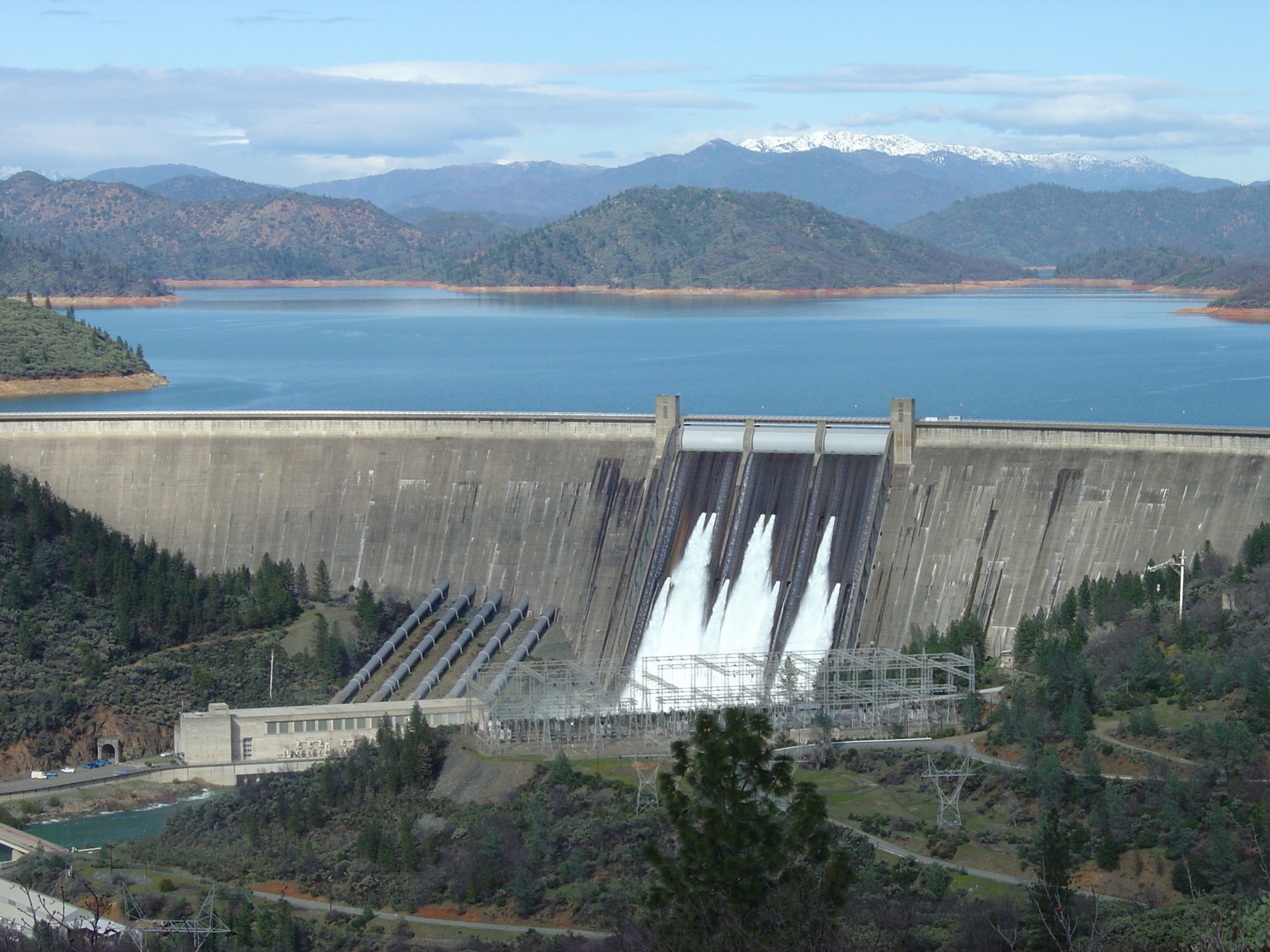
In terms of water, the new rules will increase the amount of cold water stored behind Shasta Dam in order to maintain healthy temperatures for spawning salmon in times of drought.

Provides more supply to California’s water users AND better protects struggling fish

Opponents claim that the new rules are bad simply because they provide more water for farms, businesses, cities and town. But as with the existing BiOps, that is an outdated way of viewing the situation. Water supply in California does not have to be a zero-sum game. Thanks to improved science we have found better ways to protect fish while also providing additional supply to other water users. 

Why all Californians should care about these rules

Getting these rules right impacts the entire state. Water from the federally-run Central Valley Project delivers enough water to meet the needs of 1 million California households, over 3 million acres of some of the most productive farmland in the world and over a million-acre feet of water for fish and wildlife and their habitat, including state and federal wildlife refuges and wetlands. The State Water Project serves the water needs of 750,000 acres of productive farmland and the domestic water supply for two-thirds of all Californians.

Having the new rules in place will provide greater flexibility within the entire system, producing greater reliability of supply for all.

Where do we go from here?

As exciting and forward-looking as the new BiOps are, they are one piece of a very complicated water puzzle. Federal, state and local governments must continue to work with all water users to bring our entire water management system up to date.
Statement by Mike Wade, Executive Director of the California Farm Water Coalition on the Initial Allocation Announcement by the Bureau of Reclamation

Statement by Mike Wade, Executive Director of the California Farm Water Coalition on the Initial Allocation Announcement by the Bureau of Reclamation

February 25, 2020

“Today’s announcement by the Bureau of Reclamation of a 15 percent initial allocation for water supplies south of the Delta is clearly the result of the dry hydrology California is experiencing. February is shaping up to be possibly the first time in recorded history without any measurable precipitation. That alone is evidence that California may be on the leading edge of another drought.

“These dry conditions are similar to what we saw in 2009. For months farmers were not given an allocation amount and told they may get zero water. In April of that year, well past the time to make effective planting decisions, the allocation was set at 10 percent.

“The new biological opinions implemented last week are already making a difference by allocating 15 percent in February. We’re obviously hopeful that allocations will rise, but we’re pleased to be off to a better start than we were under the old operating rules.

“Had the new biological opinions been in place last year we believe an additional 1 million acre-feet of water could have been stored for use this year, delivering more water and offering better species protection, based on what we’ve learned over the past 10 years studying the Delta and its tributaries.

“That kind of operational flexibility is essential for California to remain the nation’s leading farm state and to continue to produce more than half of the fruits, nuts, and vegetables grown in the U.S. as well as vast amounts of dairy, beef and nursery products.”

Statement on the Adoption of the New Biological Opinions

Statement by California Farm Water Coalition Executive Director Mike Wade on the Adoption of the New Biological Opinions

“For the first time in more than a decade, the federal rules known as Biological Opinions are being updated. These rules exist to protect threatened species in the San Francisco Bay-Delta region while also meeting the water supply needs of farms, businesses and people.

“The new Biological Opinions, based on more than 10 years of scientific study, will allow California to manage water in real-time using the latest science rather than relying on an arbitrary calendar approach that takes years to recognize updated research. The decade-old rules are based on outdated science and have failed to help Delta smelt, Chinook salmon and other threatened species. And to keep us from once again letting rules get outdated while struggling species suffer, the new Biological Opinions allow for ongoing scientific review as well as independent evaluation by outside experts.

“Getting these rules right impacts the entire state. Water from the federally-run Central Valley Project delivers enough water to meet the needs of 1 million California households, over 3 million acres of some of the most productive farmland in the world and over a million-acre feet of water for fish and wildlife and their habitat, including state and federal wildlife refuges and wetlands. The State Water Project serves the water needs of 750,000 acres of productive farmland and the domestic water supply for two-thirds of all Californians. We applaud the Trump Administration as well as California leadership including Representatives Kevin McCarthy and Devin Nunes for their part in making this a reality.

“To be clear, this is just one piece of a very complicated puzzle that we hope includes new Voluntary Agreements on water. We support the Newsom Administration’s efforts to make water policy work better for all Californians.”

###

Newsom on California Water Future & Voluntary Agreements

Newsom on California Water Future

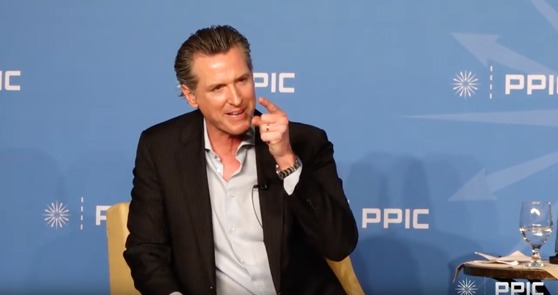
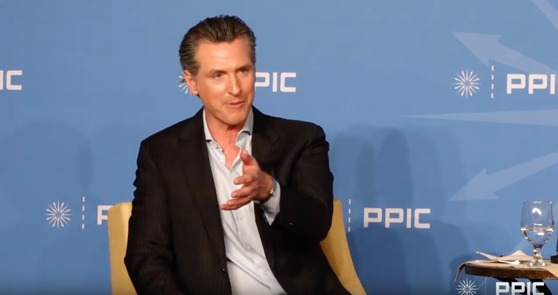
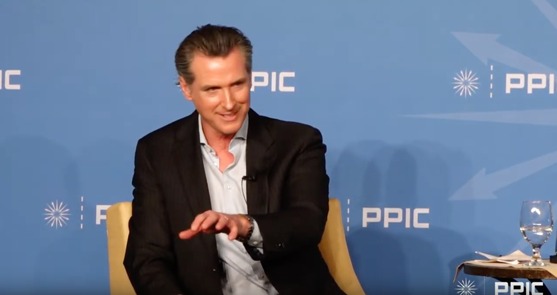
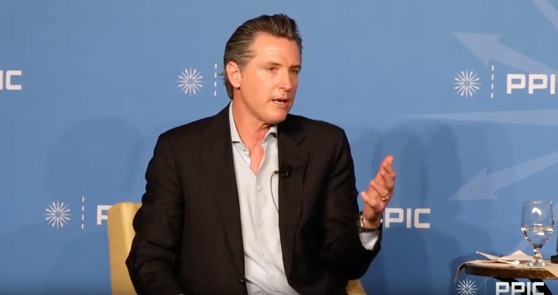
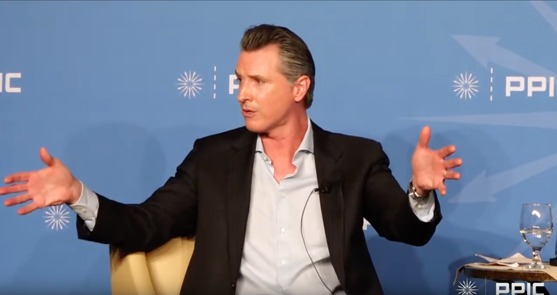
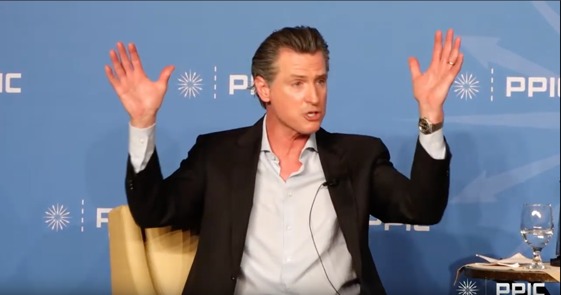
On January 29, 2020 Governor Newsom spoke on the topics of energy, wildfires and climate change to an audience with PPIC (Public Policy Institute of California.) He was asked about his strategy for California water.

These are real human beings whose lives are being torn asunder because of the scarcity of water.

…That’s why I think we can do more with flexibility, working together.

You’re not bringing that back by getting in seven years of lawsuits where nothing gets done. That’s why I’m pursuing voluntary agreements… 

When we talk about fallowing land, that is real people, real lives, and I have to look them in the eyes. 

It may be an intellectual thing for some who are sitting on the coast, with all due respect, reading the newspaper and talking about the aggregate and saying “well our economy is doing fine”- but what about that poor damn mother that literally can’t take care of that kid because they can’t get that work anymore?

You don’t do that to someone. You don’t destroy that community… …We have got to be held accountable.

I want everyone to calm down. …Just give us a chance.

I have one of the best EPA directors we have ever had. He’s one of the great champions of the environment. I have one of the best water folk… Wade Crowfoot and the team he’s assembled- These are real, great human beings that care deeply about the environment, and they think it’s right to reach out to ag and work with these guys.

The world is changing – We have to change with it – flexibility. Putting the old binaries aside; getting off our high horse; recognizing that we need each other. 

There’s no leak on your side of our boat, we need each other.

Watch the full video of Governor Newsom at PPIC on YouTube: LINK

Skip to his comments on water: LINK


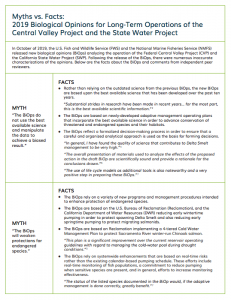
2019 Biological Opinion Fact Sheet

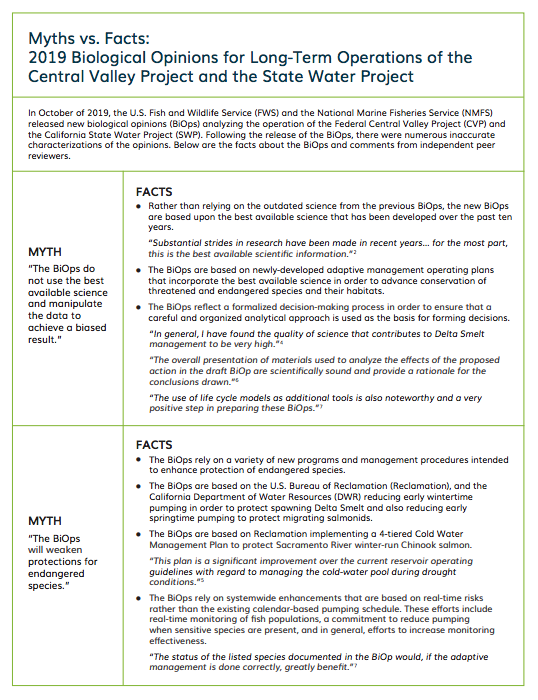
In October of 2019, the U.S. Fish and Wildlife Service (FWS) and the National Marine Fisheries Service (NMFS) released new biological opinions (BiOps) analyzing the operation of the Federal Central Valley project (CVP) and the California State Water Project (SWP). Following the release of the BiOps, there were numerous inaccurate characterizations of the opinions. To address this misinformation, CFWC published the linked informational piece, “Myths vs. Facts: 2019 Biological Opinions for Long Term Operations of the Central Valley Project and the State Water Project“.

The new fact sheet helps clarify four areas where incorrect information has been circulated in public: the use of best available science, protections for species under the Endangered Species Act, how the new BiOps go farther to protect imperiled species, and the process by which the BiOps underwent peer review and approval.

Developing rules that are designed to protect California’s natural resources requires an open and transparent process. The Biological Opinion fact sheet includes a list of FWS and NMFS independent experts that reviewed them prior to their approval, ensuring that the final product will provide the species protections expected under the ESA.

View or download the fact sheet at: https://bit.ly/2QFxkOp

Myths vs. Facts: 2019 Biological Opinions

Myths vs. Facts: 2019 Biological Opinions for Long-Term Operations of the Central Valley Project and the State Water Project

In October of 2019, the U.S. Fish and Wildlife Service (FWS) and the National Marine Fisheries Service (NMFS) released new biological opinions (BiOps) analyzing the operation of the Federal Central Valley Project (CVP) and the California State Water Project (SWP). Following the release of the BiOps, there were numerous inaccurate characterizations of the opinions. Below are facts about the BiOps and comments from independent peer reviewers.


A California Farm will Likely Contribute to Your Family Thanksgiving

A California Farm will Likely Contribute to Your Family Thanksgiving

One of the many things Californians have to be grateful for this Thanksgiving is that we live in a state that produces

an abundance of fresh food that not only feeds but nourishes, our families. At a recent Public Policy Institute of California (PPIC) seminar Karen Ross, Secretary of the California Department of Food and Agriculture talked about California farmers “sense of purpose to help feed people, and not just feed them calories, but to nourish them. . . the kinds of crops California grows are so foundational to the best nutrition. . . that’s what we do here and we do it better than anyone else.”

California’s food diversity

We’re also fortunate that the variety of foods grown throughout California reflects the diversity of the state itself. With more than 71,000 farms producing 400 different commodities, pretty much every region of the state hosts farming, making year-round access to the foods we love something we tend to take for granted. Let your imagination be your guide.

Most of us are aware that, in addition to turkeys, the Central Valley produces an abundance of fruits, nuts, vegetables, and dairy products. But California farming is much bigger than that and keeps healthy food within easy reach. From the Central Coast Californians can count on strawberries, artichokes, lettuce, broccoli and cauliflower; you can head south for avocados for your salad as well as flowers for your holiday table; or head north for milk, cheese and other dairy products; stop in the Bay Area for garlic; and if you’re a sushi lover, the rice may well have come from the Sacramento Valley. Looking for bok choy or other Asian vegetables to have on your table? They are grown abundantly from Salinas to Santa Maria. A variety of mushrooms sprout in Santa Clara and Monterey. Apples are grown north of Los Angeles, east of San Diego, in the Central Valley and the North Coast.  And if you have wine with dinner, it now comes from many regions, including Napa and Sonoma, the San Joaquin Valley, Central Coast, and Sierra foothills.


California is the nation’s No. 1 farm state

As the nation’s largest agricultural producer, there aren’t many parts of the state that don’t host farms or farm-related businesses. Again, from Secretary Ross, California farms, “produce an astonishing array of products and achieve the highest standards in quality, food safety, and environmental stewardship.”

And California farming itself is a diverse business. It not only employs people growing and harvesting the food, but it also provides jobs throughout the state to people who transport, process and distribute the food in addition to companies that support farming by providing advanced irrigation, new technology, updated equipment, management services and more. According to a recent study put out by the University of California, agriculture employed more than 1 million people in 2018, paying them $68 billion in wages.

Safe and nutritious food for your family

So, when you survey your Thanksgiving table remember that a large part of the food your family will enjoy is likely California-grown, which is not only part of who we are, it’s healthy and safe, good for the economy and better for the environment because it doesn’t have to be shipped or trucked from another country. And that’s truly something to be grateful for.
Clearing the Water on the Biological Opinions

Clearing the Water on the Biological Opinions

There has been a lot of discussion recently about the federal rules known as biological opinions that are intended to protect threatened and endangered species in the San Francisco Bay-Delta region. According to the U.S. Fish and Wildlife Service, a biological opinion, “…is a document that states the opinion of the service whether or not a federal action is likely to jeopardize the continued existence of listed species in the destruction or adverse modification of critical habitat.”

We are nearing the end of 10 years of implementation of the biological opinions that were adopted in 2008 and 2009 and aimed but failed to lead to the recovery of Delta smelt and Chinook salmon. The U.S. Fish and Wildlife Service
and National Marine Fisheries Service, two agencies responsible for implementing the Endangered Species Act for different species, recently released updated versions of these biological opinions.

Calendar-based approach is outdated

Some stakeholders claim that existing calendar-based regulatory structures, rather than the new, real-time monitoring proposed under the updated rules are more protective of species. By contrast, many other stakeholders see a way to improve the reliability of water deliveries while also making positive changes in the environment. Specifically, we believe the new set of biological opinions actually increases protections for listed species and will help fish populations start to recover, rather than continue to decline as they have during the decade we’ve spent basing decisions on a calendar instead of emerging science.

Better protection for fish

So how are the new biological opinions an improvement over the previous ones? Here are four ways that fish receive the same or better protection moving forward.

Increased cold water pool at Shasta

1. Increased cold-water pool at Shasta. The additional amount of cold water that will be stored behind Shasta Dam will be used to maintain healthy temperatures AND will be managed better in order to protect salmon spawning in the Sacramento River.

2. Pumping restrictions related to salvage at the pumps. The salvage (or “take”) target for reducing pumping will be the 10-year average that was achieved under the old biological opinions. Some groups point to the old versions as the Gold Standard. Operating the Central Valley Project under the new biological opinions will not take any more fish than were taken under the old, outdated, and less flexible rules.

Projects will improve salmon spawning

3. Investments in fisheries. Under the new biological opinions, $1.5 billion will be spent on fishery improvements. That includes investments in habitat, restored spawning grounds and side channels in rivers and streams that are important to the salmon life cycle. Net pens for smelt placed in the Yolo Bypass and various reaches of the Delta will help increase smelt populations from a current estimate of about 5,000 fish to a projected half a million by leveraging the existing captive population. This trend reversal is exciting and will be subject to annual reporting, a level of transparency that did not exist under the old rules.

Real-time monitoring replaces a calendar-based approach

4. Real-time monitoring. Under the new rules, pumping restrictions would be based on real-time monitoring of where smelt and migrating salmon are in the Delta, rather than the seasonal prescriptions contained in the current regulations. When we know exactly where fish are it is much easier to make determinations for water project operations that deliver more water for people without any increased risk for fish.

Flexibility for water users

Creating better habitat, improving stream flows, controlling predators, and protecting listed species from the pumps in the Delta can help turn the tide for California’s struggling fisheries. These improvements will translate into more flexibility for water operators, which is good for farms, homes, and businesses. It is the kind of success we have sought, but one that has been out of reach under the old biological opinions.

Welcome to the Future of California Water Policy

Welcome to the Future of California Water Policy

While we await an update on the Voluntary Agreements, it’s a good time to take a closer look at the many benefits of this generational change in managing water and the future of California water policy.

First, it’s important to understand just why the Voluntary Agreements are so revolutionary.

The regulatory structure we’re leaving behind operates by defining winners and losers. In a complete break with this system of built-in conflict, California is recognizing that we all share our most valuable resource and all water users should participate in determining its allocation. Under the Voluntary Agreements:

All water users come together and make decisions through a collaborative process:

Water users large and small, farms, cities, rural communities, conservationists as well as federal, state and local agencies have input, making the results comprehensive and immediate. In fact, the array of benefits provided by the Voluntary Agreements are only possible because of the cooperative process.

Urban realities are recognized and planned for: We can’t pretend that people don’t need water or that the state will cease to grow. Conservation is critical, but it can’t be the only tool. The Voluntary Agreements will help meet the needs of urban Californians as well as assist in preparing for the future.

Rural communities are not left behind: In the past, some rural areas have lacked a strong enough voice to ensure reliable surface water deliveries. Under the Voluntary Agreements, they have that voice.

Farms secure water reliability: California families, and the world, depend on our farms for healthy, affordable food. In fact, according to the Environmental Defense Fund (EDF), “Food demand is expected to increase by more than 50% in just the next 30 years as the world’s population continues to grow.” EDF goes on to say, “Together, we can secure healthy food and clean water for all people without sacrificing the environment.”

We agree and believe the Voluntary Agreements are critical to making that happen because they provide farms with a key missing ingredient: reliability. If farms don’t know how much water they will have they can’t make planting decisions. In exchange for using less water overall and providing funding for environmental projects, farms will know how much water they will have and be able to plant accordingly.

The environment gets an increased and stable water budget: Because the Voluntary Agreements are a result of collaboration between all stakeholders, the increased amount of water for the environment will be protected. In September 9, 2019 comments submitted to Governor Newsom, the Public Policy Institute of California (PPIC) noted this as a key factor in building a water resilience portfolio. “One of the more important tools that should be adopted is ecosystem water budgets—blocks of water set aside for the environment that can be managed flexibly.” The Voluntary Agreements provide this important tool, delivering support for fish as well as wildlife.

Ongoing funding provided for ecosystem management: In the same report, PPIC also recommends we begin treating the ecosystem as a whole by addressing multiple issues at once. “Rather than focusing on just protecting listed species in order to acquire Clean Water Act and endangered species Act permits, the goal is to define and manage toward a healthy ecosystem.”

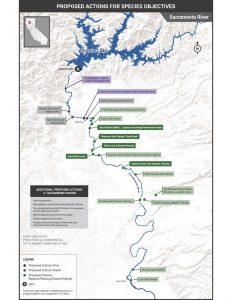
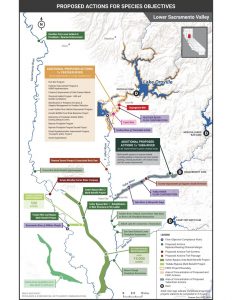
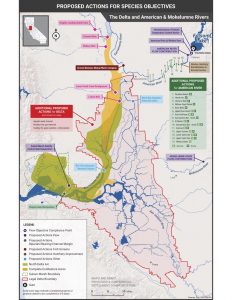
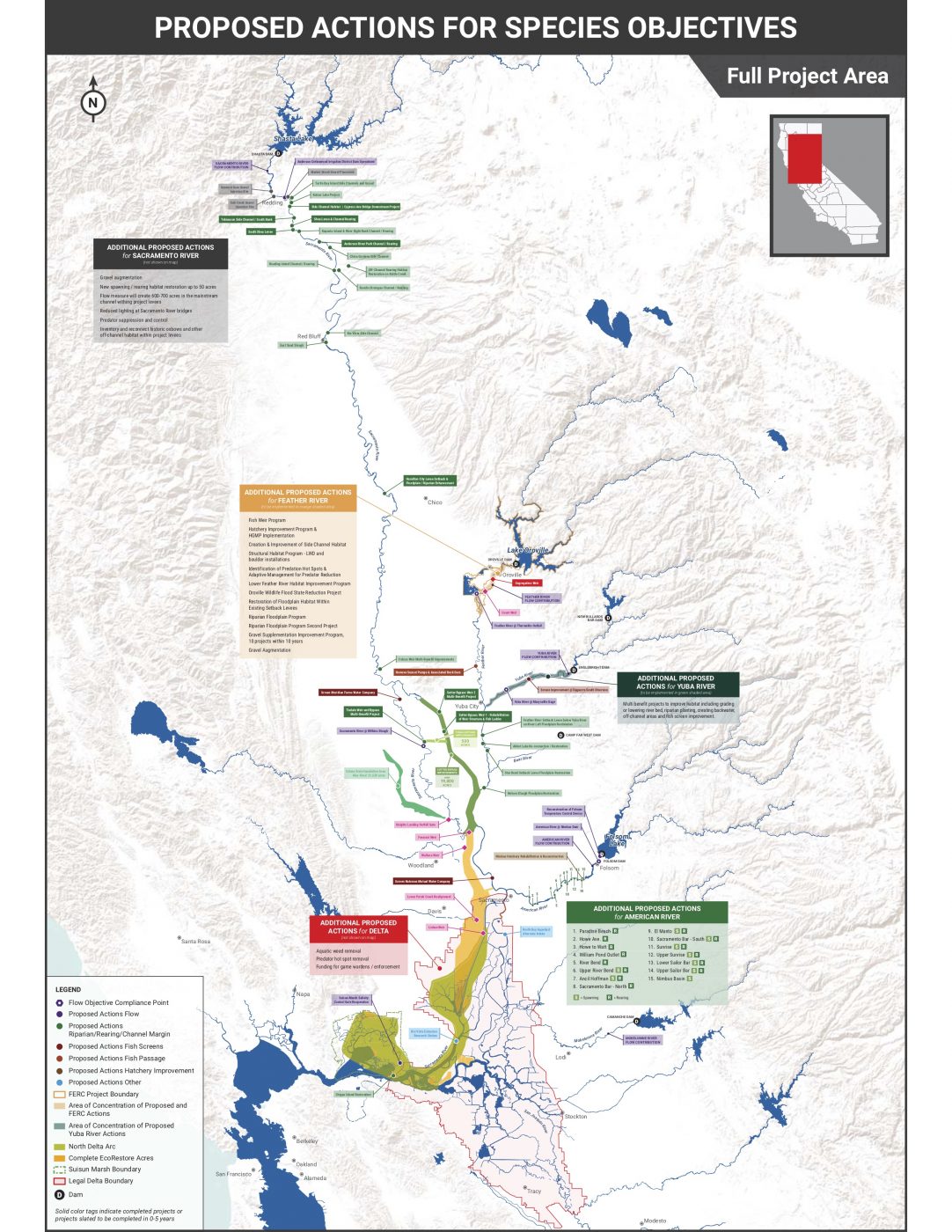
In another historic first, farms and other water users are agreeing to tax themselves in order to meet this goal. Scores of projects will be launched under the Voluntary Agreements from fish screens and fish passages to the creation and improvement of habitat to the removal of predator hotspots. These projects, combined with environmental water budgets, will help repair our critical ecosystems and keep them healthy for future generations. (See project maps) PPIC notes one existing project as an example of the kinds of multi-benefit projects necessary: “The Sacramento Valley salmon restoration program—which facilitates the use of the region’s lands and waters for agriculture, waterfowl habitat, salmon migration, and flood control—is a good example.”

Science is real, let’s use it. One thing we know for certain is that our current system is not working for anyone or anything, including the environment. Over the past decade, threatened fish have continued to decline and one of the reasons is outdated science. Our existing regulatory system is simply not nimble enough, nor does it include enough flexibility to adapt as science evolves. In fact, in passing a new flow plan in December of 2018, the California State Water Resources Board noted that it is currently not allowed to consider any factors other than water quality requirements and the amount of water in our rivers. That means they could not utilize everything we’ve learned about the multiple causes of declining fish populations. Under the Voluntary Agreements a new adaptive management structure will allow us to monitor progress and adjust as our experience and knowledge grow – and that’s good for everyone.

Solutions are tailored to ecosystems. The needs of the ecosystem on the Sacramento River are different from the San Joaquin, which are different from the Feather River and on down the line. Rather than apply one-size-fits-all solutions, the Voluntary Agreements are built on a foundation of local expert knowledge and experience, with all stakeholders at the table.

Governor Newsom and his administration have shown tremendous vision in making this break with business as usual. The Voluntary Agreements are a bold move into the future, and we look forward to working with all water users to make them successful. The time is now for Californians to choose a science-based future for our water supply and the environment.