Conflict to Collaboration

Conflict to Collaboration

A regulatory approach has dominated water management in California over the past three decades. This was a significant shift from the development phase of California’s water system, as described by water policy expert Tim Quinn, former executive director of the Association of California Water Agencies. Many believe that policy-makers and water users are making another transition, this time from conflict to collaboration.

A near empty San Luis Reservoir during the 2012-2016 drought

Significant changes like this, where new or increasing demands lead to policy changes that increase resource scarcity, often generate resistance among the negatively impacted parties. In California, this resulted in warring factions fighting over water supplies, often in a zero-sum game of winner take all, or, more accurately, winner take most. The detrimental effect of the regulatory approach to water management on farms, farm jobs, rural communities, and California’s economy is squarely rooted in dwindling water supply reliability.

It’s important to note that not all water supply shortages are caused by regulatory restrictions. California’s variable hydrology also plays a role; however, the ultimate impact is intensified by the restrictions imposed by State and federal regulatory actions affecting the delivery of water to millions of people and millions of acres of farms throughout California.

Local Cooperation Increases Water Deliveries to Farms and Wildlife Refuges

At the local level, farmers on the west side of California’s San Joaquin Valley saw the reliability of their water supply contracts fall from about 90 percent in 1989 to roughly 30 percent in the last five years. These water supply restrictions were based mostly on environmental regulations intended to improve populations of Chinook salmon and Delta smelt, however numbers of the listed species continued to decline, despite the imposition of regulations that, over time, have redirected vast amounts of water from agricultural uses to environmental uses.

In an effort to respond to these policies and improve the reliability of their dwindling water supplies, local water agency members within the San Luis & Delta-Mendota Water Authority chose a different path, one of collaboration.

Starting locally, senior and junior water rights holders, along with wildlife refuges, began working together on multi-benefit projects that increased water conservation or modified the timing of water deliveries, providing additional water supplies for farms and flexible water management for the refuges. This collaborative effort helps deliver more water for irrigation in the summer, while increasing the ability to deliver supplies to refuges in the fall when it is needed most for waterfowl habitat.

The benefits of local cooperation are improved by recent policy decisions at the federal level to increase opportunities to deliver water to farms when its available, while at the same time, enhancing protections for endangered fish.

Federal Response Enhances Regulatory Structure to Improve Water Supply Reliability

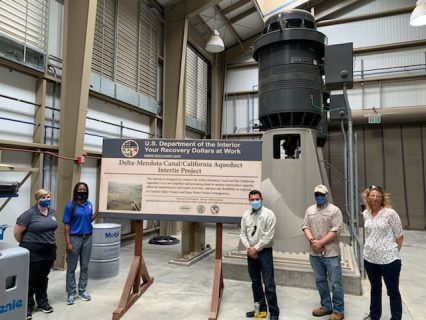
USFWS Director Aurelia Skipwith with SLDMWA Executive Director Federico Barajas along with agency staff

U.S. Fish and Wildlife Director Aurelia Skipwith came to California recently to participate in a tour of California’s federal water infrastructure, the federal San Luis National Wildlife Refuge, and local farms near Los Banos. She brought with her a message of cooperation, unity, and a desire to continue to enhance the regulatory structure to improve the reliability of water supplies and improve protections provided for threatened and endangered species.

Director Skipwith comes from a background in the agricultural industry, has a law degree, and co-founded AVC Global, a company designed to reduce inefficiencies “…in buying and moving agricultural products from the farm to the final use,” according to the AVC Global web site.

Her primary responsibility is administering federal laws, such as the Endangered Species Act, which means her real-world experience developing partnerships, problem solving, and achieving goals while taking into account the people on the front lines where federal laws are implemented is a real asset. It’s clear that she brings a real-world perspective to her role as the head of the Fish and Wildlife Service.

“President Trump’s (October 2018) Executive Order on water brought together agricultural, municipal, and environmental stakeholders to finish the update of the biological opinions,” she said.

That update had begun during the Obama Administration.

“Under a short timeframe, the parties had to work together to make it happen, she said. “President Trump, (Interior) Secretary Bernhardt and the Fish and Wildlife Service helped broker what was an amicable process.”

New Biological Opinions Improve Conditions for Water Users and Listed Species

The end result is a new set of biological opinions that have helped deliver more water to farms and provide better, more science-based solutions to species protections. Instead of the former calendar-based approach to species management, new science generated from 10 years of research into California’s Bay-Delta has improved protections for fish and helped deliver more water to the people who need it.

CFWC Executive Director Mike Wade with USFWS Director Aurelia Skipwith

Director Skipwith also mentioned the Great American Outdoors Act, recently passed by Congress, to help end the
maintenance backlog at the country’s National Parks and National Wildlife Refuges.

“There is a $1.3 billion backlog of projects like this and $1 billion of it is in refuges. Refuges are public lands that need to be in good shape for the species that depend on them and they also need to be welcoming and accessible for the people who visit to enjoy the wildlife and open space. It’s a blessing to have bipartisan support for it,” she said.

She praised the efforts of local water agencies, including the members of the San Luis & Delta-Mendota Water Authority and the San Joaquin River Exchange Contractors Water Authority for their efforts to forge agreements that include the Fish and Wildlife Service. Those agreements help local water users and the federal government operate more efficiently while delivering water to grow the nation’s food and to protect vitally important neighboring wildlife refuges.

Support for Farmers During Covid 19 Should be Mirrored with Support for Reliable Water

Support for Farmers During Covid 19 Should be Mirrored with Support for Reliable Water

Californians are resourceful by nature and a prime example of that creativity is support for farmers during COVID 19 mirrored with support for reliable water.

A July 9, 2020 article in the Washington Post highlighted a few of those efforts. (Farm to Parking Lot to Table: The Pandemic is Inspiring Creative Efforts to Get Locally Sourced Food)

Food supply chain disrupted by pandemic

With all the supply chain disruptions that have come with the pandemic, many farmers are having trouble getting the food they grow through the system and into consumers’ hands. As this article points out, groups of neighbors are banding together to buy from farmers and set up ad hoc distribution networks of their own.

Drive-through produce pick-up supports local farmers

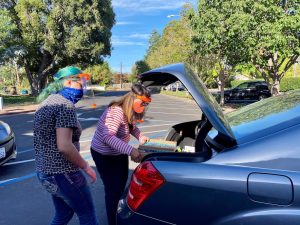
Volunteers load produce from nearby farms into customers’ trunks. (Heather Kelly/The Washington Post)

An operation in Silicon Valley, named Giving Fruits by its creator, makes bulk fruit and produce available for drive-through pickup every Friday. In addition to the ingenuity of the process, what shines through is the support for farmers and an understanding of how important it is to have food grown locally.

One customer, Allyson Rosen, said, “. . .now knowing that the farmers are in trouble, I really want to support this. . .when it comes to fruit like this, it’s worth every penny, and to support the farmers.”

All California families are struggling with the effects of this pandemic, so California farmers genuinely appreciate all the public support.

Food production depends on reliable water supplies

But it’s important to point out that reliable water supplies are needed to be able to continue growing the fresh produce that comes from California farms.

Farmers work hard to use water efficiently, conserve wherever possible, and recycle. According to the Public Policy Institute of California (PPIC), agricultural water use in California is down 15 percent since 1980 and production is up more than 60 percent. But the bottom line is, it still requires water to grow our food.

Together, we must push for more smart storage projects, both large and small and designed to enhance ecosystem benefits as well as water supply. The right projects are a sensible way to increase our ability to capture water during wet years for use in drier times. We need government support for expanded recycling as well as overdue infrastructure fixes that help save the water we already capture. And we need all stakeholders to cooperate at the local level on how best to manage the water we do have for people, farms and the environment. If we do these things, not only will farmers be able to continue growing the healthy food we all love, Californians will have a more reliable water supply.

CFWC Highway Banners

[gview file=”https://www.farmwater.org/wp-content/uploads/2020/07/Highway-Banners_numbered-10-16-19.pdf”]

State Water Board Action Threatens Jobs, Food Supply

State Water Board Action Threatens Jobs, Food Supply

In a stunning move that could wreak havoc on California farms, the broader California economy and our food supply in a time of national crisis, the California State Water Resources Board is trying to use regulatory maneuvers to cut this year’s water supply to California farms.

In February of this year, the Bureau of Reclamation announced the federally-run Central Valley Project would only be able to fulfill 15% of its water commitment to farmers due to a drier than normal year. In May that amount was increased to 20%. Even with this meager allotment, farmers marched forward, made their plans, purchased supplies, planted crops and committed other dollars needed to get through the growing season.

And now, in the middle of the season, the State Board wants to take back the small amount of water already promised. Losing that water now not only throws away all the money farmers have already committed, it does damage to the entire California economy just at time when we’re trying to claw back from the economic devastation of the COVID-19 pandemic.

Job losses in the San Joaquin Valley will be staggering, putting further pressure on our stressed unemployment system. And according to an economic analysis completed earlier this year by University of California, Berkeley, economist Dr. David Sunding, farming job losses don’t stay in the Valley – they quickly spread throughout California to the other industries that service the farm sector.

These moves also decrease tax revenue to already strapped state and local governments. We’re already faced with devastating cuts to education, police, fire, health services and more. Additional loss of revenue will only exacerbate an already critical problem.

Unfortunately, this is not only happening in California. Farmers on the California-Oregon border in the Klamath Basin are facing similar cutbacks of already-promised water as a result of pressure from other federal agencies on the water supplier, the Bureau of Reclamation. A recent protest by Oregon and California farmers and their supporters brought together 2,200 vehicles in a convoy stretching 29 miles through the region.

Our food supply has been one of the few things Americans have been able to count on during the coronavirus shutdown. That’s because farmers put in almost a year of planning, planting and work to keep that supply steady. It is never a good time to renege on a commitment but doing it in the middle of a global pandemic is unconscionable. The State Board needs to work with the federal government to work out any issues and let farmers get back to the job of feeding the state and the nation.

Agricultural Industry Letters to Governor Gavin Newsom, President Donald Trump, and Congress

Agricultural Industry Letters to Governor Gavin Newsom, President Donald Trump, and Congress

Newsom Ag Letter

  • 75 California agricultural organizations
  • Repair and modernize existing water supply and conveyance infrastructure
  • Reconsider State’s legal action against 2019 Biological Opinions
  • Fund infrastructure to replace groundwater supplies lost to SGMA
  • Reconsider CDFW Incidental Take Permit


Western Letter to President Trump

  • 150 Western Agricultural Organizations and Public Water Agencies
  • Water conservation and management improvements, fish passage, and habitat restoration
  • New water storage projects
  • Federal financing for shovel-ready projects
  • Policy changes to assure that projects are built in a timely fashion


Western Letter to Congress

  • 150 Western Agricultural Organizations and Public Water Agencies
  • Water conservation and management improvements, fish passage, and habitat restoration
  • New water storage projects
  • Federal financing for shovel-ready projects
  • Policy changes to assure that projects are built in a timely fashion


[gview file=”https://www.farmwater.org/wp-content/uploads/2020/05/Newsom-Ag-Letter-FINAL-May-1-2020-1.pdf”]


[gview file=”https://www.farmwater.org/wp-content/uploads/2020/05/Western-Letter-to-President-on-Water-Infrastructure-4-20-20.pdf”]


[gview file=”https://www.farmwater.org/wp-content/uploads/2020/05/April-2020-Western-Letter-to-Congress-Water-Infrastructure.pdf”]

Governor urged to end lawsuit, back away from California’s Incidental Take Permit

Governor urged to end lawsuit, back away from California’s Incidental Take Permit

A letter, dated May 6, 2020, to Sen. Dianne Feinstein from Reclamation Commissioner Brenda Burman and second letter on the same date from six members of the California Congressional Delegation to Governor Gavin Newsom urge California to take a new course of cooperation instead of litigation to solving the state’s major water supply issues. The letters urge the governor to drop pending litigation, including a motion for a preliminary injunction, as well as backing away from California’s new Incidental Take Permit, which effectively reduces State Water Project supplies for hundreds of farms and millions of California citizens.

Letter to Sen. Feinstein

“For the first time in recent memory, we are on the brink of a significant and positive change in the way California water is managed… Instead, however, the State has now chosen to embrace the tactics of litigious interest groups…”

Letter to Governor Newsom:

“The preliminary injunction that your Administration is pursuing, if successful, will deny tens of millions of Californians, including those who live in the San Francisco Bay Area, Los Angeles, the Inland Empire, and San Diego, the water they depend on to live and thrive. [This will] also deny the water needed to keep the fertile San Joaquin Valley producing the agricultural products that we all eat, ultimately jeopardizing a keystone in our nation’s food supply…

[gview file=”https://www.farmwater.org/wp-content/uploads/2020/05/TheHonorableDianneFeinsteinUnitedStatesSenate05062020.pdf”]

[gview file=”https://www.farmwater.org/wp-content/uploads/2020/05/Member-Letter-to-Newsom-on-Litigation-5-6-20-FINAL.pdf”]

May 1, 2020 Letter to Governor Newsom

May 1, 2020 Letter to Governor Newsom

[gview file=”https://www.farmwater.org/wp-content/uploads/2020/05/Newsom-Ag-Letter-FINAL-May-1-2020.pdf”]


Dear Governor Newsom:

Thank you for your clear and decisive leadership during the COVID-19 pandemic.  Your administration’s response to this crisis reflects California’s spirit of community, motivated by the innovation and individualism that makes California stronger, safer and a partner its neighbors and the nation can count on in the fight against COVID-19.

California’s agricultural community embodies that same California spirit.  Its farmers responded to COVID-19 by developing new ways to grow the nation’s food supply while protecting workers on the frontlines, keeping the state and nation fed.  California’s packing houses and distribution networks safely deliver food to every grocery store in the nation and will continue to meet the demand for abundant, nutritious food for the American people.  But as it has for all industries, the COVID-19 crisis has revealed weaknesses in agriculture that must be addressed.

California’s essential workers deserve our highest praise for helping to ensure the nation’s food supply is processed, shipped and stocked on local grocery store shelves everywhere.  Their essential work starts with the farmer and rancher, who produce the food and fiber that form the first critical link in the long and essential supply chain that ends on the grocery store shelf.  The importance of a resilient food supply was highlighted in the April 24, 2020 letter from 20 members of the Legislature who wrote to Ms. O’Leary and Mr. Steyer asking that food supply be one of the highest priorities for the Task Force on Business and Jobs Recovery as they work to recreate a resilient California economy.

Unlike other essential industries, farmers and ranchers work on nature’s schedule. They must start planning production operations a year in advance.  Farmers’ crops must be planted, watered, tended, and harvested based on the seasons.  Farmers cannot speed up the growth of lettuce, tomatoes, corn, or oranges.  There is no way to “catch-up” if fewer crops are planted this year.  What is planted this spring is the food supply this fall and next year.

To ensure next year’s food supply keeps grocery store shelves full it is essential that California’s farmers have all the tools they need to grow the crops they are planting now. Unfortunately, the response to the COVID-19 pandemic has failed to consider the importance of these necessary tools.

A reliable water supply is at the top of this list of tools farmers need to grow the food that will appear in grocery stores later this summer, this fall and next year.  Making sure farmers have the water to grow next year’s food supply is as important as making sure grocery store shelves are stocked today.

California’s farmers need access to as much water as the state can provide this year.  Unfortunately, the current water year has been dry, with very little rain and limited snowpack in the upper watersheds. This discouraging hydrology is compounded by restrictions on use of groundwater and surface water supplies.  Our farmers are left with few options. Unfortunately, the dry hydrology cannot be changed. However, government-imposed restrictions can accommodate farmers’ needs.  We urge you to direct state agencies to find creative and balanced means to maximize water supplies for farmers. Where possible, rules that limit farm water supplies should be suspended, modified, or postponed during this critical time.

We reiterate the message conveyed in recent letters from members of the California Congressional delegation and urge your administration to work cooperatively with the federal administration on water management. A cooperative federal-state management scheme should be applied in all those critical watersheds where the federal government has made significant investments, from the Klamath River, to the Bay-Delta and the Colorado River. In this way, we can be assured that state and federal water management coordination is maximizing water supplies while respecting our state’s commitment to the environment.  As your administration has recognized in other areas, cooperation between the state and federal administrations is the best way to solve the new and unprecedented challenges we face.  Improved state-federal coordination on water issues also will help ensure California’s farmers are efficiently and responsibly using the state’s limited resources to maximize the crops they grow this year.

The undersigned respectfully request that you take the necessary steps to help secure next year’s food supply.  We urge you to direct your agencies and departments to find ways to maximize water supplies for farmers this year, until such time that we can normalize the food supply chain from farmer to grocery store shelf.

California also needs to ensure that its farmers continue producing a safe, healthy and abundant food supply into the future.  We recommend the following outline for state and federal stimulus efforts to ensure they address the water supply infrastructure that serves California’s farmers and supports the future of our state and national food supply.

Repair and modernize existing water supply and conveyance infrastructure –Climate change, drought and regulation have reduced the water supply once available to farmers.  And, when excess water is available, we are missing opportunities to capture and move it simply because our water delivery infrastructure is broken.  Subsidence on the state’s major water delivery canals is one example.

Subsidence along segments of the California Aqueduct, Delta-Mendota Canal and Friant-Kern Canal has significantly reduced the amount of water that can get to our farmers.  Repairing these three canals will improve water supplies to more than two million acres of agricultural land growing more than 200 different crops that create jobs for more than 131,000 people in the underserved Central Valley.  In addition, downstream jobs in other parts of the state associated with these same two million acres employ another 39,000 people.  These repair projects are “shovel ready” and construction can begin immediately.  They simply require funding support.   Local agricultural water agencies are ready to pay their share, but the costs are high and state and federal funding assistance is critically needed. Funding these shovel-ready projects will create jobs, protect our food supply and provide value back to the state for generations.

Accelerate and Support Existing Programs – Researchers at Columbia University recently identified the current dry period facing California as one of the worst in a millennium.  This historic drought period is compounded by state-driven institutional actions, including: 1)  regulatory programs which seek to reduce groundwater use under the Sustainable Groundwater Management Act (SGMA); 2)  a state lawsuit against the U.S. Departments of the Interior and Commerce; and 3)  a new permit issued to the State Water Project that reduces water supplies beyond what is necessary to protect species under the Endangered Species Act.  We believe California can find ways to turn these negative impacts on farming into positives by: 1) reconsidering the state’s legal action against biological opinions that protect endangered fish; 2)  providing funding to build water projects capable of replacing groundwater supplies lost to SGMA; and 3) reconsidering the scientific foundation of the California Department of Fish and Wildlife’s recently issued Incidental Take Permit for the State Water Project (SWP).

The State of California also has an important role to play in the future of farming in the Klamath Basin, which straddles the state border with Oregon.  Thanks to the formal request made by you and Oregon Governor Kate Brown, the Department of Interior will provide some welcome emergency drought assistance in 2020 that will benefit wildlife and mitigate many individuals’ conditions.  But the situation is very unstable and the community is ridden by uncertainty and anxiety.  In the immediate term, California could provide funding for the California portion (Tulelake Irrigation District) of Klamath Project-wide infrastructure assessments for modernization and optimization, as the Oregon Energy Trust has done in the Oregon portions of the Project.

Current water conservation programs are periodically funded through water bonds and can improve agricultural water supplies by making water conservation measures more affordable for farmers.  While these types of demand management programs do not make new water available, they can help stretch existing water supplies.  Any new infrastructure stimulus bill should include significant funding that incentivizes farmers to further employ state-of-the-art on-farm water conservation technology that would otherwise be unaffordable.

Expand Current Water Supply Infrastructure – California has several options for expanding the capacity of existing water supply infrastructure. These modernization and expansion projects can create jobs in the near term and support rural agricultural economies over the long-term.  For example, repair and enlargement of B.F. Sisk Dam and enlargement of Shasta Dam can increase surface water storage without adding new dams on any river.  The impacts of these expanded reservoirs can be mitigated in ways that increase protections for endangered species by providing additional cold water and creating more flexible pumping operations that can be modified to protect fish at sensitive times.  New storage facilities such as Sites Reservoir and Temperance Flat Reservoir can provide significant new water supplies for rural economies while adding benefits for native species in the Sacramento River, the San Joaquin River, and the Delta.

On the Klamath River, Oregon and California have led an unprecedented effort to remove water infrastructure considered to be outdated (four private hydroelectric dams).  A return to an equivalent focus on irrigation infrastructure, groundwater recharge opportunities, strategic storage, and facilities upgrades is equally important, and there are willing partners in the Klamath Project and elsewhere in the Klamath watershed.

Our state stands at a historic crossroads. We believe that the California spirit is evident in the leadership shown by your office and the willingness of Californians to change their way of life for the good of all.  We are honored to be part of that effort and proud to produce the food that feeds the state, our nation, and many other countries.  Now is the time to take a second step in our response to COVID-19 by protecting the ability of the state’s farmers to keep grocery store shelves stocked with safe, healthy food grown in California.  We respectfully request that your administration look for every possible way to increase water supplies to farmers to ensure this year’s crop meets next year’s need.

Sincerely,


African American Farmers of California
Ag Council of California
Alameda County Farm Bureau
Amador County Farm Bureau
American Pistachio Growers
Association of California Egg Farmers
Bill Diedrich, Diedrich Farms, Firebaugh
Bob Amarel, Yuba City
Butte County Farm Bureau
California Agricultural Irrigation Association
California Alfalfa and Forage Association
California Apple Commission
California Association of Wheat Growers
California Bean Shippers Association
California Blueberry Commission
California Citrus Mutual
California Cotton Ginners and Growers Association
California Farm Bureau Federation
California League of Food Processors
California Safflowers Growers
California Tomato Growers Association
California Warehouse Association
California Wild Rice Advisory Board
California Women for Agriculture
Central Valley Project Water Association
Colusa County Farm Bureau
Contra Costa County Farm Bureau
Del Norte County Farm Bureau
Del Puerto Water District
El Dorado County Farm Bureau
Elephant Butte Irrigation District
Family Farm Alliance
Family Water Alliance
Far West Equipment Dealers Association
Fresno County Farm Bureau
Glenn County Farm Bureau
Joe Del Bosque, Del Bosque Farms, Firebaugh
Kern County Farm Bureau
Kings County Farm Bureau
Klamath Water Users Association
Lassen County Farm Bureau
Liz Hudson, Hudson Farms, Sanger
Madera County Farm Bureau
Mark Borba, Borba Farms, Riverdale
Mark McKean, Riverdale
Merced County Farm Bureau
Milk Producers Council
Modoc County Farm Bureau
Neil Jones Food Company
Nevada County Farm Bureau
Nisei Farmers League
Olive Growers Council of California
Orange County Farm Bureau
Placer County Farm Bureau
Sacramento County Farm Bureau
San Diego County Farm Bureau
San Joaquin County Farm Bureau
San Luis Obispo County Farm Bureau
Santa Barbara County Farm Bureau
Shasta County Farm Bureau
Siskiyou County Farm Bureau
Sonoma County Farm Bureau
Stan Lester, Lester Farms, Winters
Stanislaus Irrigation District
Tehama County Farm Bureau
Trinity County Farm Bureau
Tulare County Farm Bureau
Tulelake Irrigation District
Wayne Western, Clovis
Western Agricultural Processors Association
Western Canal Water District
Western Growers Association
William Bourdeau, Chairman, California Water Alliance
Yolo County Farm Bureau

On the farm, every day is Earth Day

On the farm, every day is Earth Day

Scientific Study + Proven Results = Smarter Water Management and Greater Reliability for All Californians

Every Californian knows that water policies should be balanced to help support fish populations and the environment, productive farmland, businesses, and people. That’s not happening because decade-old science is embedded in a top-down regulatory system that lacks the ability to incorporate new science as it becomes available.

Birds with OverlayThe good news is there is a clear path forward that will lead to a more secure water future for all Californians. Science has been telling us for some time that fish need more than water to survive – habitat improvements, predator control and food supply are also critically important.
 

And we have results to prove it works

Partnerships to Implement New Science on Butte Creek Turned 100 Salmon into 10,000

Working together, farmers, urban water users and conservationists made improvements to Ducks with Overlayfish passage, fish food production and habitat for juvenile salmon as well as more water at the time fish needed it the most.  The result has been a dramatic increase in returning salmon from as low as 100 to an average of 10,000 annually. Birds and other species have also benefitted.
Dos Rios Ranch Ecosystem Restoration. Another example of a large-scale ecosystem restoration is happening across 2,100 acres where the San Joaquin and Tuolumne Rivers meet. Spearheaded by River Partners and joined by a large group of partners from government, agriculture and environmental groups, it seeks to create a “habitat preserve that goes far beyond single-species or single-suite focus.” Improvements include fish screens, re-establishing native vegetation and managing the floodplain to benefit fish. Salmon that are allowed to linger in managed fields, grow faster, stronger and more vigorous than those without respite from currents.

Operation FatFish – Scientists Teamed Up with Farms to Produce a New Food Supply for Fish

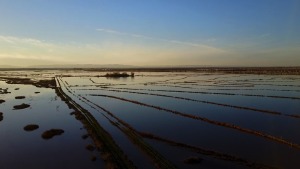
Sunset on field 2If salmon are malnourished, they’re not strong enough to reach the Pacific Ocean and populations decline. Partnering with scientists at UC Davis and CalTrout, farms have been flooding fields in the winter in order to grow bugs fish depend on for food and then re-connecting these floodplains to the river. Results from Operation FatFish have shown an increase in growth and health of salmon inside seasonally flooded rice fields. In addition, these managed wetlands support millions of waterfowl, shorebirds and other waterbirds along the Pacific Flyway.
Boulders & Branches – Experiments with Fish Habitat Have Produced Improving Salmon Populations

River Garden Farms created 25 fish habitat shelters made of almond trunks and walnut tree root wads. These were bolted to 12,000-pound limestone boulders and dropped into the river. The roots and branches are designed to help juvenile winter-run chinook survive by serving as a shield against swift river flows and predators. A survey conducted by wildlife biologist Dave Vogel revealed a large school of juvenile salmon had taken to the tree roots. Salmon were finding refuge and populations improving.

Gravel Mining Reach Project. Another larger-scale riparian habitat restoration is in process on the Tuolumne River.

Because of its length, the project is being completed in phases. The first of four phases was finished in 2003. When complete, it will establish a lengthy river channel and riparian floodway that will provide safe habitat for fish.

Biologists Urged Restoration of Spawning Grounds, Leading to Successful Collaborative Projects

Over time some traditional salmon spawning grounds have been filled in. One example is Painter’s Riffle, a side-channel on the Sacramento River that successfully produced fish nests resulting in up to 750,000 young salmon since the 1980’s. When a major storm filled in the channel, farms, water districts and government agencies partnered to open it again. Speaking of a similar project, the Market Street Habitat Project, U.S. Bureau of Reclamation Biologist John Hannon said, “These projects are an important part of helping our local fish populations weather the drought conditions and recover in the future.”

Additional Spawning Habitat Restorations Completed Elsewhere. In 2007, thirty-three riffles were created as spawning habitat on the Stanislaus River as part of the Lover’s Leap Restoration Project. In 2015, 7.2 acres of spawning and rearing habitat were rehabilitated on the Merced River as part of the Henderson Park Project.


Obviously, fish need water, but what science has shown us is that water alone is not the answer.

Water Landscape with overlay

By following the path that science has laid out for us, we can improve the environment while increasing water availability and reliability for all California water users.

It Is Time to Modernize Our Water Supply Infrastructure

It Is Time to Modernize Our Water Supply Infrastructure

“Today’s letters by over 150 agricultural organizations and water interests to President Trump and Congress underscores the need for investments in our water supply infrastructure to protect the nation’s food supply

“The COVID-19 pandemic has revealed how much we all depend on a reliable food supply chain. Making sure farmers are prepared to feed the country tomorrow is only possible if we make smart investments in our water supply system today.”

“Simply put, farmers need water to grow the food we all depend on. Many of the facilities that supply water to farms, rural, and urban communities were built more than 50 years ago and are unable to meet the needs of an increasing population without investments to keep them operating.”


Statement by Water and Agricultural Interests

(Washington, D.C.) – A coalition of 150 organizations representing water and agricultural interests in the western U.S. urged Congress and President Trump today to address aging Western water infrastructure as further measures are considered to help the U.S. economy recover from the ongoing coronavirus crisis.
“The COVID-19 pandemic underscores the importance of safety and stability provided by domestic food production,” the groups stated in separate letters to Congress and the president. “As this crisis has pointed out, a stable domestic food supply is essential and of national security interest. For farmers and ranchers to survive, and for food to continue to be produced here in the American West, a stable water supply is a necessary part of any conversation about our national food security.”
 
President Trump has stated his belief that renewed efforts to meet the systemic infrastructure demands of the nation will be an important step in combating the long-term impacts of the pandemic.
 
“We strongly agree,” the organizations stated in the letter to the White House. “In particular, we urge you to advance critically needed investments that address the shortcomings of our aging Western water infrastructure.”
 
Existing water infrastructure in the West needs rehabilitation and improvement. Most of the federally funded water infrastructure projects that benefit the large cities, rural communities and small farms in the West were built more than 50 years ago. As hydrological conditions in the West change and populations continue to expand, failure to address water security has become increasingly critical.
 
“Failing to improve water infrastructure and develop supplies will inevitably result in additional conflict as pressure grows to ‘solve’ urban and environmental water shortages,” the groups stated in the letter to Congress. “Moving water away from Western irrigated agriculture will surely contribute to the decline of our national food security.”
 
The coalition letters-spearheaded by the California Farm Bureau Federation, Family Farm Alliance and Western Growers-emphasize that water conservation, water recycling, watershed management, conveyance, desalination, water transfers, groundwater storage and surface storage are all needed in a diversified management portfolio.
 
“If and when additional infrastructure funding is discussed as part of a larger economic stimulus package, we need your help to ensure that federal dollars flow to the water infrastructure needs mentioned above,” the letters conclude.

Funding Shovel-Ready Water Projects Can Help California Recover More Quickly

Funding Shovel-Ready Water Projects Can Help California Recover More Quickly

As the news cautiously turns to a discussion of getting back to work, we’re all trying to envision, and plan for, what our new world will look like.

In California, one issue we still must deal with is ensuring an adequate water supply for people, farms and the environment.

And while there are hopeful signs of a new, cooperative path forward between all water users, putting a new policy structure in place is just part of the solution. The good news is, there are things that can be done to improve our existing infrastructure that could produce benefits now.

As the federal government considers another round of stimulus legislation one of the things on the table is a list of shovel-ready water projects. Californians are used to thinking of water projects as massive undertakings that could be in process for decades. And while these larger projects are still important, there are a host of smaller projects, ready to go, that could make an immediate difference in the state’s water supply – if only they had funding.

Much of our existing water infrastructure is aging and in need of repair. Some of the fixes would be small in overall dollars when you consider the breadth of the federal stimulus effort, but significant in terms of benefit.

Install Concrete Canal Linings

Many of our canals that move water around the state were built decades ago. California loses a significant amount of water when it seeps out of these aging conveyances. Lining canals with concrete could save thousands of acre-feet of water. One proposed project estimates that lining 10,000 linear feet of canal would save 5,000 acre-feet of water every year. That’s enough water to meet the household needs of 60,000 people or produce 166 million salads.

Repair Cracks in Tunnels

Tunnels have carried water throughout California for more than a century and are another example of water conveyance in need of repair. As they age and develop cracks, we can lose significant amounts of water. Repairing those existing tunnels can be accomplished relatively quickly and could save a lot of water that would otherwise simply be lost.

Fix Gates and Other Water-Control Mechanisms at Dams and Reservoirs

Water stored in reservoirs is managed with gates and valves that regulate its flow. But when the parts of these structures begin to wear and start leaking, that leaked portion of our water supply is no longer efficiently managed. Making overdue repairs to ensure this vital infrastructure doesn’t leak is just common sense.

Increase Storage Capacity of Existing Structures

Californians have witnessed the shifting weather patterns in our state. When precipitation does come down, we’re seeing a tendency towards more rain and less snow. And our water years tend to boomerang between very wet and very dry, making water storage even more critical. Capturing water in wet years for use when it gets dry is something the public supports, and it can take decades to plan and build the infrastructure we need. While larger projects are in process, there are things we can do to increase storage now. One of them is increasing the storage capacity of existing dams, which is cost-effective and can bring quicker results.

Fish Screens and Other Environmental Protections

Increasing our ability to protect fish allows us to more safely move the water so desperately needed by all Californians. The science behind fish screens shows us they work and installing them on rivers is an investment in both water supply and the environment.

California farmers produce more than 50 percent of the nation’s fruits, nuts, and vegetables and we’ve seen throughout the coronavirus pandemic how critical it is to keep our food supply moving from farm to grocery store. Supporting these cost-effective, timely, common-sense measures will help make our water supply more reliable for all Californians. And that’s something we can all get behind.