Central Valley Project Users Can’t Get a Break

Dead Citrus Trees

WATER SUPPLIES ARE better than normal in Northern California, so why is it that Central Valley Project (CVP) water users can’t get a break? The water users in question are the farms and ranches in the San Joaquin Valley that rely on the federal Central Valley Project water conveyance system. They are set to receive a meager 5 percent of their water supply this year.

It’s the middle of May and rainfall in the northern Sierra is currently 111 percent of normal. Lake Shasta is 93 percent full and 108 percent of its year-to-date average. By all accounts there is sufficient water in the system operated by the federal government to meet the needs that the CVP was designed to serve – irrigation and municipal water supplies. But the priority for the project in the last two decades has shifted from providing water for people to being geared toward environmental demands. This almost complete reallocation of California’s federal water supply has reached a point where the people paying for the project are no longer able to rely on it to serve their needs.

The ripple effect reaches an area in excess of 3 million acres (1.2 million hectares) – more than one-third of the irrigated cropland in California. In contrast, California’s other large water supplier, the State Water Project, is delivering a 60 percent allocation to its customers. Many other areas of the state are on track to receive 75– 100 percent of their normal water supply.

Water districts find themselves in the same position as Oliver Twist asking for an additional spoonful of gruel – and it’s looking less likely that they will get any.

The newly styled CVP management impacts go far beyond the farms receiving the pittance of water being delivered to the San Joaquin Valley. The kicker is that without farmers paying for irrigation water the repayment of the construction costs of the CVP falls behind, and operation and maintenance (O&M) costs escalate for other users within the CVP. Federal water users in Northern California have seen O&M prices more than double because they end up carrying a greater share of those costs when water supplies are shorted elsewhere in the state.

What is occurring is a slow-motion train wreck. Much of the blame can be placed on federal fishery managers overseeing the Sacramento-San Joaquin Delta with a myopic view of what constitutes effective protection for Chinook salmon and delta smelt. Water supplies have been cut over the last 24 years in favor of fishery management but the fish aren’t doing any better. In fact they’re worse off than they were before the U.S. Fish and Wildlife Service stepped in after Congress passed the Central Valley Project Improvement Act in 1992.

According to Dr. Sean Hayes of the National Oceanic and Atmospheric Administration (NOAA), the awareness of other stressors is now more prevalent, which includes invasive species, predators, poor ocean conditions and the loss of salmon and smelt-rearing habitat. Yet fishery managers continue to limit farm water deliveries on the Sacramento River and through the Delta as their only tool to try to protect the fish.
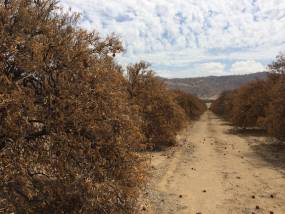
Dead Citrus Trees
Citrus Trees Lost Due to Drought and Water Supply

A mild shift in how we manage the problems affecting the Delta can pay big dividends in the future. Fishery managers need to pay attention to emerging science. Allowing unlimited fishing for predators in “hot spots” where they are known to congregate can help salmon in the short term. Investing in tidal marsh habitat will provide more natural areas for young salmon and delta smelt to grow, giving them a fighting chance for survival and reproduction. And installing a barrier at the head of Old River will help maintain a more natural flow through the Delta, keeping fish on track during their migration.

Taxpayers have shelled out hundreds of millions of dollars in this failed effort, both in direct costs supporting the Endangered Species Act and in aid to families displaced when farm jobs and the water that supports them are taken away. It’s time for a comprehensive look at how we manage our water resources. The taxpaying public, water users, local communities and our environment deserve better.


L.A. Times Letter: George Skelton uses half-truths and shaky logic to demonize farms

George Skelton uses half-truths and shaky logic to demonize farms

The Coalition’s Executive Director, Mike Wade, recently responded to persistent inaccuracies by the L.A. Times columnist George Skelton in his recent article: “So the drought has you watering less? It won’t matter much” in a Letter to the Editor.   The text of the letter is below.

George Skelton L.A. Times Staff
George Skelton, L.A. Times Staff

“George Skelton uses half-truths and shaky logic to demonize farms already under the gun.

Despite claims that “it’s basically hands off agriculture,” large portions of California agriculture this year are suffering through a 95% cut in surface water allocation. That’s not a cut to sneeze at.

Skelton would do well to abandon the language of “slurping” and “devouring” when describing water used by farmers. Taking into account all water used in the state, the Department of Water Resources has identified that just 40% — not 80%, as Skelton is so fond of saying — goes to agriculture.”

California Agriculture Fact Sheet

California Agriculture Fact Sheet

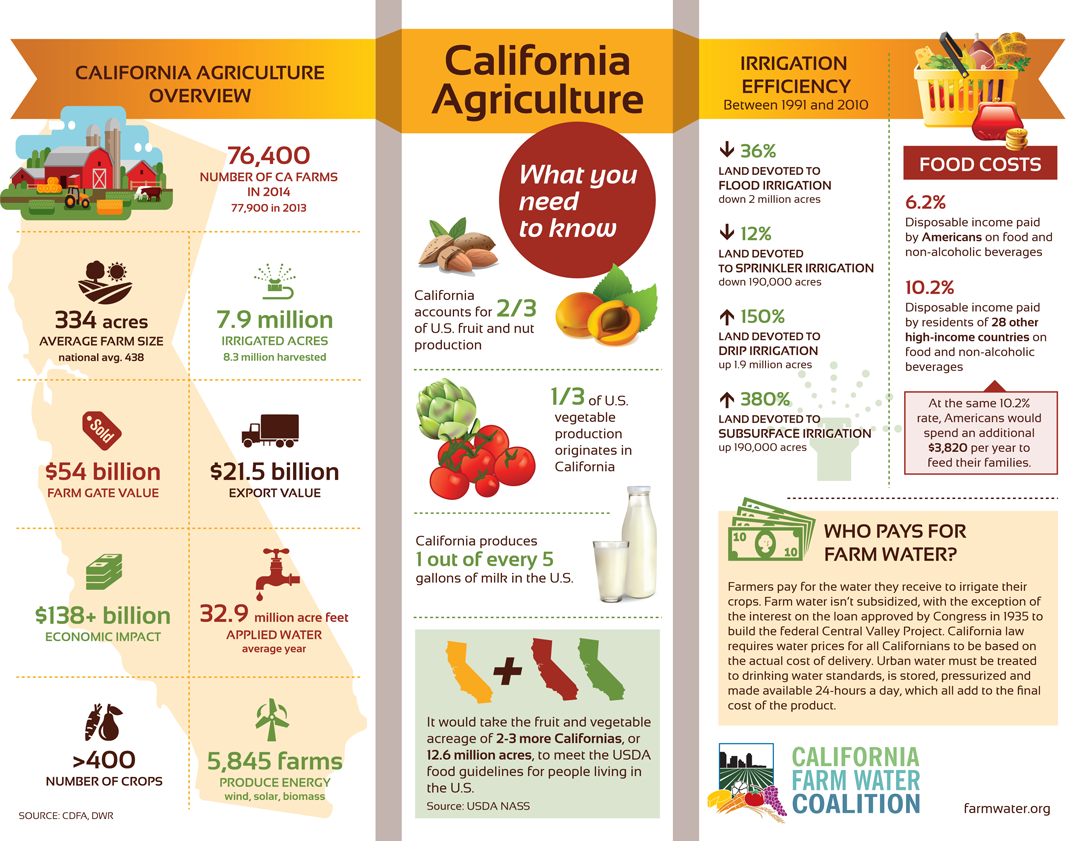
California’s farms are an important part of America’s food and fiber network. Our farms are among the most efficient in the world. Learn more about the important role California’s farms play in producing food and fiber for us all with this fact sheet.

California Agriculture Fact Sheet
California Agriculture Fact Sheet. Click to Download as PDF

Farmers helping fish

Figure2b_RedwoodCreek-1There has been considerable conflict lately between water users and fishery managers over the operation of the Sacramento-San Joaquin Delta. Biological opinions dating back to 2008 and 2009 have wreaked havoc on water supplies for farms, homes and businesses in the San Joaquin Valley and Southern California. Between December 1, 2015 and April 4, 2016, 913,000 acre-feet of water that could have been put into storage for use later this summer instead went out to the ocean with no measurable environmental benefits. That represents almost 300 billion gallons, or enough water to meet the domestic needs of 5.3 million people for a full year.

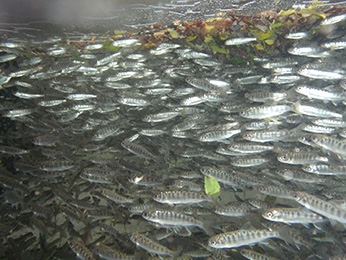
That’s why it’s refreshing to hear some positive news about partnerships that benefit both people and the environment. Oakdale Irrigation District and South San Joaquin Irrigation District recently approved a plan to sell up to 75,000 acre-feet of water to farmers in the San Joaquin Valley who have been largely cut off from water deliveries because of the salmon and Delta smelt biological opinions. The water sale benefits the environment because the timing of the releases is being coordinated with environmental pulse flows, which helps push salmon down the Stanislaus River to the Pacific Ocean. Hopefully, three years from now, they will have grown and return to spawn in the river. That’s assuming that the baby salmon can avoid the voracious predatory bass lurking in the Delta that some studies indicate consume over 90 percent of the out-migrating baby salmon.

The water sale benefits the environment because the timing of the releases is being coordinated with environmental pulse flows

The benefit of the transfer revenues to both Oakdale and South San Joaquin Districts is a furtherance of their investments in advancing water conservation activities back home. That’s a triple bottom line if there ever was one. The ecosystem benefits through timing of fish flows. San Joaquin Valley farmers benefit because they faced little to no surface water deliveries for the past three years. And the overall efficiency of California’s water supply system benefits through improved water use efficiency and conservation.

Let’s seek more solutions like that.

Statement on Allocation of California Water by USBR

Dead Citrus Trees

Today’s announcement of a 5 percent allocation for Central Valley Project water users south of the Delta is another blow to farmers, rural communities and consumers who buy California farm products.

If last year is any indication a number of specialty crops grown on the San Joaquin Valley’s Westside will once again be on the chopping block. In 2015 Westside acreage planted to tomatoes and garlic fell 9 percent and 17 percent, respectively. The combined spring and fall season lettuce acreage was hit even harder with a 53 percent decrease because of water shortages. This year’s dismal water allocation, despite near normal rain and snowfall, is an indication of how inefficiently the federal fishery agencies are managing segments of California’s water system.

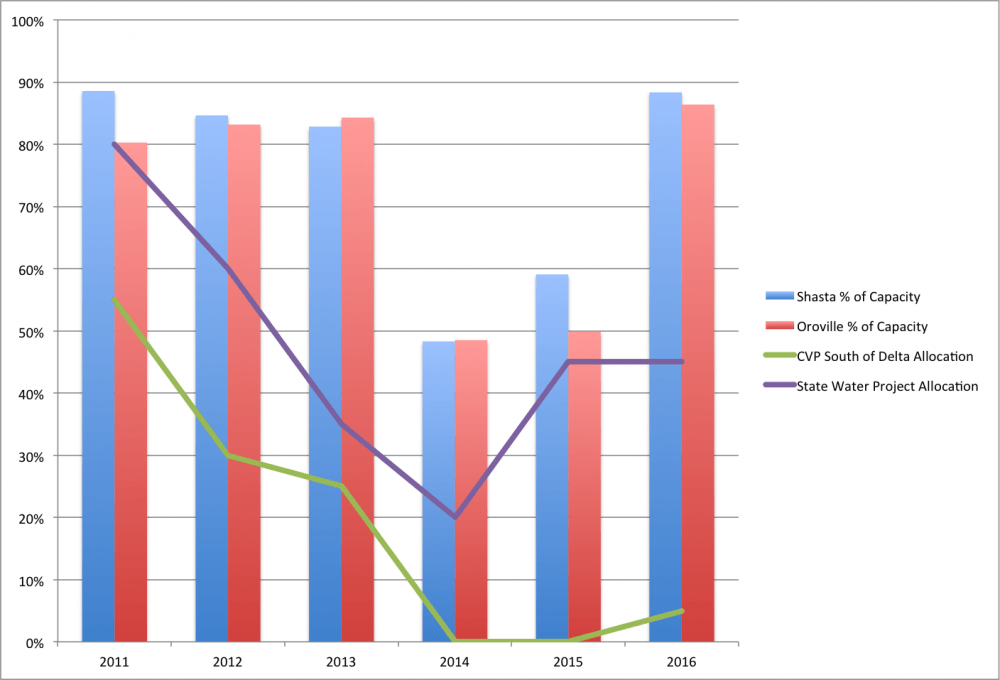
“If federal water allocations continue at these disastrous levels, more of the food that consumers Chart showing water storage and annual allocations from State and Federal agenciesbuy will be grown on foreign soil that does not have the food safety and security requirements of California-grown food,” said Mike Wade, executive director of the California Farm Water Coalition.

Eastside farmers in the Central Valley Project’s Friant system are receiving just 30 percent of their water this year. A portion of the Friant supply is being used to fulfill other contract obligations that the federal government is unable to meet because of restrictive water management decisions. In the last two years an estimated 25,000 acres of mature citrus trees, or almost 10 percent of the state’s production area, were removed in response to water shortages. California produces 85 percent of the nation’s fresh citrus.

Federal fishery agencies are restricting water deliveries to large swaths of California farmland and urban communities under the guise of protecting threatened and endangered Delta smelt and Chinook salmon. Despite 20 years of the same kind of pumping restrictions, fish populations are continuing to decline and the agencies have been unable to point to any hard science that justifies those decisions.

Above normal winter rains in Northern California have helped fill the state’s largest reservoirs, Lake Shasta and Lake Oroville, to above 85 percent of capacity and over 100 percent of year-to-date average. Urban communities are now making decisions to relax watering restrictions that were put in place during the drought.

In contrast to today’s disappointing federal announcement, California’s State Water project is expected to deliver 45 percent of requested water allocations. The much lower federal allocation flies in the face of the fact that the federal project’s Lake Shasta currently holds 31 percent more water, or a million acre-feet more than the State project’s Lake Oroville.

The Fix on California WaterFix

The San Luis & Delta-Mendota Water Authority has filed a motion to disqualify State Water Board officers Felicia Marcus and Tam Doduc.

Imagine getting arrested and during your first court appearance the judge tells you that you’re guilty. Imagine then that the judge says that you’ll receive a trial but the only outcome in question is how long you’re going to spend in jail.

It doesn’t matter that there has been little evidence to justify your arrest or whether the court is even considering information appropriate to your case. What’s done is done and you will be suffering the consequences despite the obvious predetermined opinion of the court.

Imagine no further. That is essentially what is happening with regard to the State Water Resources Control Board’s authority to consider a petition to request additional points of diversion for the state’s water supply.

The U.S. Bureau of Reclamation and California Department of Water Resources filed a joint petition for additional points of diversion for the California WaterFix project. This petition asks the State Water Board to allow federal and State Water Project diversions to be moved from their existing location near Tracy to a spot on the Sacramento River just south of Sacramento.

On February 11, prior to any evidence being considered, State Water Board Hearing Officers Felicia Marcus and Tam Doduc issued an order that concluded:

“The appropriate Delta flow criteria will be more stringent than petitioners’ (USBR, DWR) current obligations and may well be more stringent that petitioners’ preferred project.”

When questioned on their decision the Hearing Officers referred to a 2010 Flow Criteria Report that the State Water Board earlier admitted provided insufficient evidence to justify a ruling in this proceeding that existing Delta flows are insufficient. At the time the State Water Board issued the report, it recognized that it did not consider potential impacts on cold water pools for Delta tributaries, other public interest matters, including economics, power production and human health, as well as the effects of flow measures on non-aquatic resources, such as habitat for terrestrial species. The State Water Board is required to balance competing uses and consider the social and economic consequences of its decisions, unlike ESA regulatory decisions where no requirement exists of considering human impacts.

Based on the predetermined nature of the February 11 Order, the San Luis & Delta-Mendota Water Authority filed a motion on March 21 “seeking disqualification of Hearing Officers Marcus and Doduc.” The motion is based on Marcus and Doduc deciding, before having the opportunity to consider evidence, that additional Delta flows will be necessary to satisfy them prior to approving the change of diversion petition.

Simply put: The State Board has decided guilt, or in this case “liability”, before anyone has had an opportunity to submit any evidence.

If this occurs in court, a judge would be automatically disqualified. Marcus and Doduc are the judges here and it appears that they should also step down and allow the process to move ahead without question of fairness.

The Hearing Officers for the State Board cannot claim to be operating in an impartial process when they’ve announced upfront what the conclusion is going to be. That kind of thing should resonate with every Californian whether they’re walking down the street minding their own business or delivering water to the public.

Read the San Luis & Delta-Mendota Water Authority’s motion here.

CWA-CCW Slides 3-12-16

Use the following link to download the slides from the California Farm Water Coalition presentation at Harris Ranch on March 12, 2016:

Link (9MB PDF)


Brentwood Kids Care Club learn about water conservation

Photograph of Brentwood Kids Care Club
The Brentwood Kids Care Club

Brentwood Kids Care Club is a group of elementary school boys and girls, started by their moms, with the idea to teach their children the variety of ways everyone can contribute to making the world a better place. As the kids schedules start to fill with the many activities related to sports, dance, and school an effort was undertaken to make a place in their lives for philanthropy activities. The goal was to make it fun, educate about the many areas we can help in our community, and instill in our kids compassion for others. The Brentwood Kids Care Club is one of many clubs from the larger organization http://kidscare.org/.

Children gathering walnuts
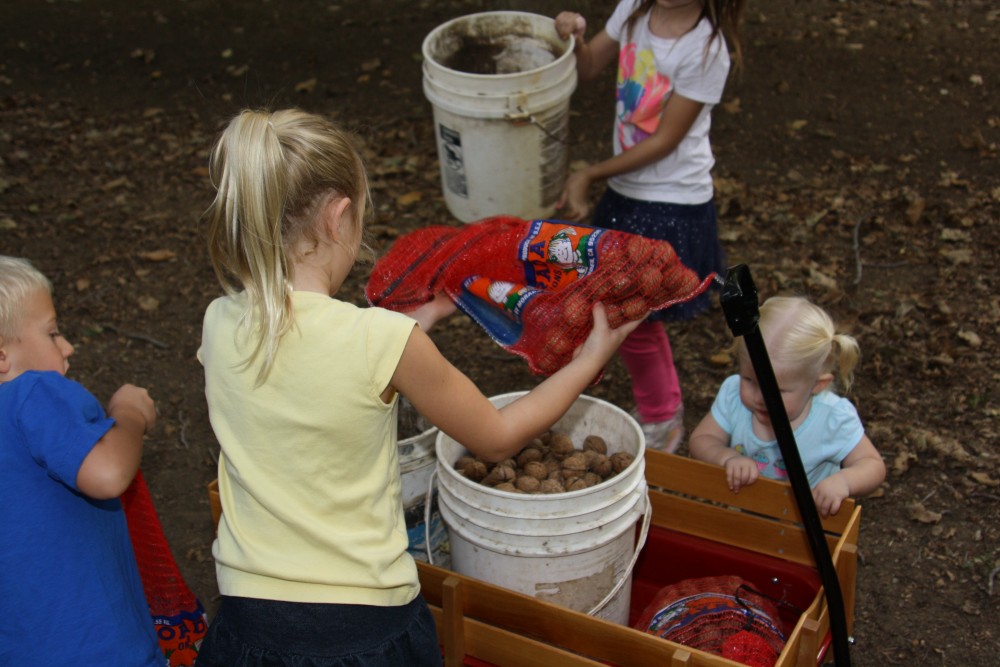
Members of the Brentwood Kids Care Club gather walnuts

Their “Walnuts to Water” activity focused on water conservation. A local farmer let the club collect the extra walnuts left over after harvest. They learned how important water is to our farms and how they can help to conserve water every day. Club members sold bags of walnuts through local businesses and to family members and friends. Their effort raised $323, which club members wanted to be used for water conservation education.

The club decided to donate their earnings to the California Farm Water Coalition to be used to distribute information on how farmers can conserve water.

Here are some tips that many farmers find are helpful ways to grow food and fiber using water as efficiently as possible:

Choose the right irrigation system
Choosing the irrigation system that best matches your crop, soil type and the source of water is very important. Some crops, such as orchards and vineyards, grow very well using high-efficiency drip and micro-sprinkler irrigation systems. Others need sprinklers, especially young vegetables and melon crops, to help them germinate and sprout. And field crops, including alfalfa and rice, do better with gravity-type irrigation, which can be very efficient when soils are right and fields are level.


Level your fields
When the field used to grow a crop is very level, water flows across it or penetrates into the ground very evenly. Having a level field helps farmers make sure their water supplies are spread evenly Leveling Fieldsand aren’t wasted with too much water in one place and not enough water in another. Farmers can use special equipment that uses lasers to guide tractors and scrapers to make sure their fields are nice and flat before they plant and begin irrigating their crops.

Let satellites guide your tractor
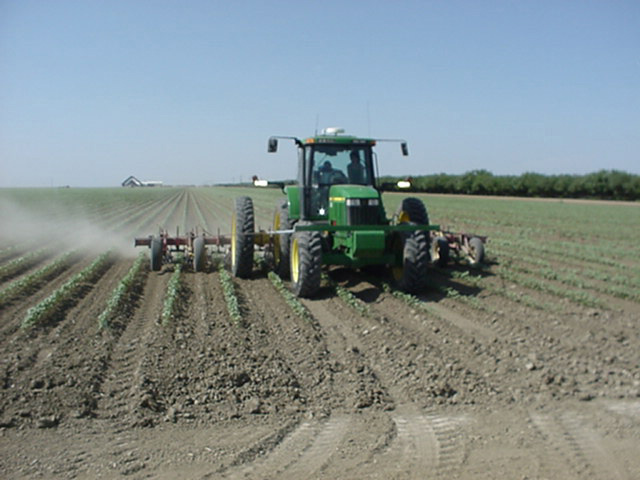
Global Positioning System (GPS) satellites can be used by tractors for guidance as they travel across the field planting seeds or turning over the soil to control weeds. A GPS system can help drive a tractor all by itself and maintain a straight row across the field much more accurately than a person can!

Check your irrigation pump
A pump that is running inefficiently can waste both water and energy. Agricultural universities and power utilities sponsor pump testing programs to check to make sure your irrigation pump is running as efficiently as possible. Special meters from utility companies also keep track of when you’re using your pump and charge lower energy rates if it is used in off-peak hours, such as after 6 pm and on weekends.

Look for leaks
It takes water to grow food so it’s important to make sure plants are getting all of the water they need to grow. Irrigation pipelines and canals can leak over time, which wastes water and money.

The bleeding of agriculture

1049000MAF

Approximate number of acre-feet of fresh water flushed to the ocean since December 1, 2015

One acre-foot is 325,851 gallons.

It is enough water to meet the household needs of two California families for an entire year.


Every day more than 6,600 acre-feet, or more than 2 billion gallons, of precious water is flushed to the ocean. That’s enough to meet the annual household needs of over 36,000 people. Every day.

Since December 1, 2015 over 218 billion gallons has been lost – enough water for almost 4 million people for an entire year.

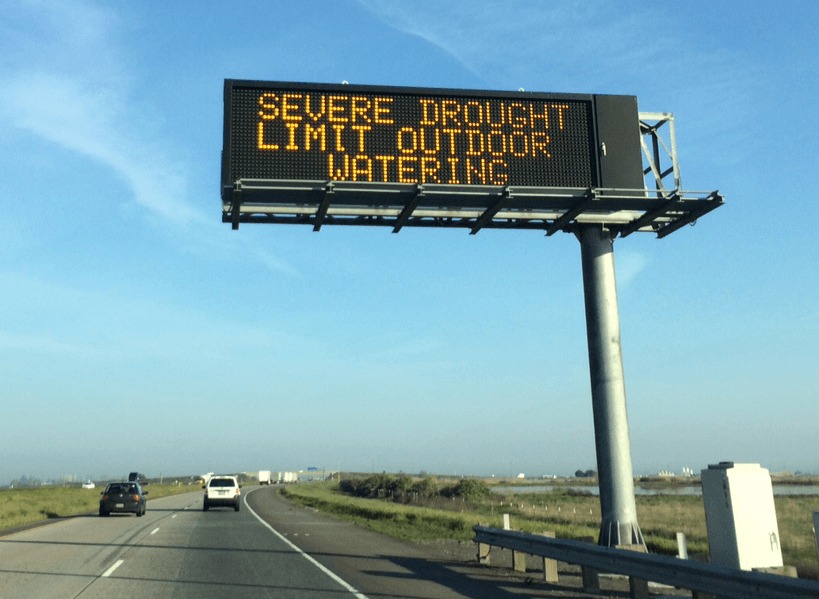
At the same time, electronic highway signs caution Californians to limit their water use because of the drought. What’s wrong with this picture?

Electronic Billboard
CalTrans billboard warns against water waste on the same day Congress takes testimony about billions of gallons of water flushed to the ocean because of failed environmental policies.

On February 23, the House Committee on Natural Resources subcommittee on Water, Power, and Oceans heard testimony that underscored what California consumers and farmers have known for years: that bureaucrats are wasting water that could serve farms and families at a rate of two billion gallons per day, all in a failed, misguided effort to save fish—and it is set to continue.

In less than 90 days between December 1, 2015 and February 23, 2016, 184 billion gallons of water has been flushed out through the San Francisco Bay. That’s enough water to supply over 3.3 million Californians with enough domestic water for a year, or to produce 9 billion salads. At the same time, CalTrans’ electronic billboards continue to urge people to reduce their water use.

These actions are supposedly meant to prevent harm to threatened and endangered Delta smelt and winter run Chinook salmon. Sadly, after years of trying the same tactic over and over, flushing all this water to the ocean has shown no measurable ecosystem benefits and instead resulted in a monumental waste of water.

Last April Governor Brown called for a 25 percent reduction in water usage by California’s urban residents. People responded with shorter showers, less outdoor watering, and more to meet the governor’s mandate. Urban users were joined by farmers, who had already lost between 40 and 100 percent of their surface water supplies. Even with this strong effort, farmers were forced to fallow fields, and farm workers stood in food lines because the jobs they had harvesting the nation’s food supply were gone.

Despite these cuts that have diverted water to salmon and smelt, population counts for these two fish have not improved. Yet water continues to be diverted, when it could instead be used to grow food, run a business, or irrigate a soccer field. Everyone wants a healthy environment, but there should be some accountability for the resources we’re quite literally pouring down the drain.

It is possible to protect the environment while giving people fair and equitable access to water. However, this gross mismanagement will continue unless Congress steps in.

Timing is Everything

Timing is Everything.

NRDC’s Doug Obegi wrote in a recent blog that we’ve captured and diverted too much water in the state’s reservoirs in January. He claims that “prevailing science” indicates that we shouldn’t be diverting more than 20 percent of unimpaired flows but he doesn’t tell us what science that is. A link in his blog goes to an opinion piece that doesn’t identify the science either.

Isn’t the water that was stored in January the same water that Doug will argue later in the year is water that we should be keeping in storage for cold-water salmon flows? I bet it is.

Isn’t the water that was stored in January the same water that Doug will argue later in the year is water that we should be keeping in storage for cold-water salmon flows? I bet it is.

In November the Chico Enterprise Record reported on an NRDC lawsuit against the Bureau of Reclamation and Sacramento River Settlement Contractors over water supply management (http://www.chicoer.com/article/NA/20151111/NEWS/151119941). The article quotes Doug on the subject of storing water for salmon.

This year the amount of cold water in Lake Shasta ran out — Doug Obegi

“This year the amount of cold water in Lake Shasta ran out, [Doug] Obegi said,” according to the paper. The story also reported that water users made an additional 440,000 acre-feet of water available for salmon by delaying deliveries to farms.

What would conditions be like if we weren’t capturing water now so it is available later in the year for multiple benefits, like fish and farms and communities? The public voted 2-1 in favor of new storage projects when they passed Proposition One, the Governor’s water bond. We think that capturing and storing water while conditions are wet is exactly what water managers ought to be doing and apparently so does the majority of California.