A California Without Rural Communities

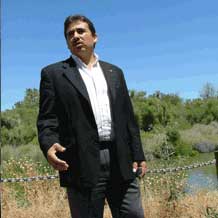
joseramirez.jpgFirebaugh is a small town on the west side
of California’s San Joaquin Valley.  As one of the
oldest continuously populated settlements in the Valley,
it boasts a rich history of Native American and Mexican
culture, gold rush prospectors, Italian, Portuguese and
Dust Bowl farm workers.  Throughout its history
Firebaugh has remained a hub of activity in the Valley
and has weathered the changes seen by its inhabitants
since the early 1800s.

Originally called Las Juntas, or
“The Meeting,” the area was inhabited by the Kahwatchwah
people of the larger Yokut tribe of Native Americans. 
It was settled in 1853 and renamed by Andrew Davidson
Firebaugh.  His venture was to ferry prospectors across
the wide San Joaquin River into the gold mining region
of the Sierra Nevada mountains.
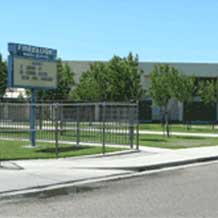
firebaughschool.jpgOver the years agriculture took
center stage in Firebaugh and helped shape the community
as it is known today.  What has remained is a dedication
to hard work that has been the hallmark of Firebaugh
residents since its earliest days.

Today Firebaugh consists of about
6,000 residents, most of whom work in agriculture or its
associated industries, such as transportation and food
processing.  According to Firebaugh City Manager Jose
Ramirez, the San Joaquin River is still the jewel of the
community.  “People from Firebaugh and the surrounding
communities come here to take part in many activities in
or around the river.  It has given this city an
advantage.” 

Proof of this can be seen in the
recently completed Andrew Firebaugh Historic Park and
Interpretive Learning Center.  The park includes the
remains of an 1885 center swing draw bridge and the
western end of the Firebaugh Ferry Crossing.  This
crossing doubled as a steamboat landing and a stop on
the Butterfield Overland stage route.

While Ramirez is confident that
agriculture is and will continue to be the backbone of
the community, he concedes that the town faces growth
from home buyers seeking an affordable place to live and
a community that has remained a small town at heart. 
The town is expecting to see 1,000 new homes in the next
two to three years, a result of people being pushed from
Watsonville, Castroville, Los Banos and southern Bay
Area communities.  Firebaugh’s first Starbucks is still
a year or two away.
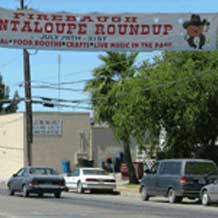
cantaloupe.jpgWhat drives business, according to
Ramirez, continues to be water.  Without it the farms
don’t produce, the processing facilities don’t have raw
food products to turn into sauces and pastes and the
local businesses, such as car dealers and restaurants,
don’t have customers to buy their products.

“How could the farms grow 15,000
acres of cantaloupes if the water isn’t there?” asked
Ramirez.  “People have to see the nexus between farm
water and the other jobs in the community.”
A Flexible System for People and Fish

South Delta Improvement Program
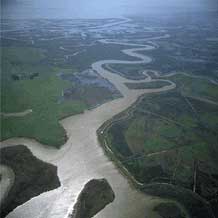
thedelta.jpgIn August of 2000, after years of deliberations,
hundreds of public meetings and development of a full-blown
environmental impact statement, the state-federal
partnership known as CalFed issued an 846-page Programmatic
Record of Decision.  This document, a detailed long-term
plan for managing California’s water resources and restoring
its environment, included a series of proposed actions
called the South Delta Improvement Program, or SDIP.

The key elements of the SDIP are:

  • Increase pumping  capacity of the State Water Project
    to 8,500 cubic feet per second;
  • Install improved fish screens at the Clifton Court Forebay
    and Tracy pumping facilities to provide increased protection
    for fish;
  • Install operable barriers to improve water quality and
    ensure reliable water supplies for San Joaquin Valley farms;
  • Construct floodway improvements on the lower San Joaquin
    River to provide conveyance, flood control and ecosystem
    benefits;
  • Reduce agricultural drainage in the Delta.

The California Department of Water
Resources (DWR) is scheduled to release a draft
Environmental Impact Report/Environmental Impact Statement
for the SDIP this fall, a step that will begin a new public
review of this program. 

The objectives of the SDIP program are:
1) minimize the straying of San Joaquin salmon into the
south delta; 2) maintain adequate water levels and quality
for local farmers; and 3) provide flexibility in meeting
fish, wildlife and water supply needs.

Increasing the capacity of export pumps
 (from a current 6,500 cfs flow) will provide significantly
more flexibility for water project and fishery managers. 
Export pumping is frequently curtailed when endangered fish
are in the vicinity of the pumps.  These curtailments
sharply reduce water supplies for farmers and cities that
depend on the exported water.  Currently, the limited
pumping capacity means it is often difficult, if not
impossible, to recover the lost water once the fish move out
of the vicinity of the pumps. 

By increasing the capacity of the
pumps, water now lost when pumping is curtailed can be
recovered when the fish move on and pumping poses no threat
to endangered species.  Fully operating to the higher
pumping limit would not begin until 2009, after new
permanent operable gates are constructed and operating. 

Because of hydrologic and environmental
constraints, the increased pumping capacity is expected to
increase annual water exports between one percent and three
percent over current levels. 

Recent indications of population
declines by some fish species that live in the delta year
round have prompted formation of a task force of state and
federal fishery managers to identify what is causing the
declines.  A careful review of decades of data indicates
water exports do not play a role in the relative abundance
of these impacted fish species.  More likely causes of the
drop in the number of delta smelt are sharp declines in a
species of zooplankton that are an essential food source for
delta smelt. 

While this important investigation
continues, DWR plans to release the draft EIR/S for the SDIP
this fall for a 90-day public review period of statewide
workshops.  In this way, the draft EIR/S can serve as a
focus for very public discussions of the best ways to
protect and restore fish populations in conjunction with
operating the State Water Project to maintain reliable water
supplies.  This public participation is vital to the
decision-making process and the eventual implementation of
any plan.

Mike Ratley

Westside Ford Sales Manager Mike Ratley[

[audio src="/images/stories/radio/radio_ratley.mp3"]
Ratley has become a familiar voice to KMJ Radio listeners from Redding to Bakersfield and California’s Central Coast with his southern drawl and down-home philosophy. Some of his ads have nothing to do with selling cars, either. If a particular subject is important to Ratley, for example election politics, he’ll record a commercial to let you know what he thinks.

Continue reading

Decisions Based on Sound Science

wim-kimmerer.jpg

California Bay-Delta Authority Advisor, chemist, Wim Kimmerer

Kimmerer is a researcher at the Romberg Tiburon Center, a research and teaching laboratory of San Francisco State University located in Marin County.

He has a background in chemistry and biological oceanography with interests in zooplankton ecology and the ecology of estuaries with an emphasis on the San Francisco Bay.


Experts agree
there is no clear link between declining fish populations in
the Delta and water exports.

Something is killing the delta smelt and
there is a major effort underway to find out what.  However
recent analyses by leading Delta fishery experts indicate
that export pumps are probably not a major factor. 

Wim Kimmerer, research scientist with the
Romberg Tiburon Center (San Francisco State University) and
advisor to the California Bay-Delta Authority (CBDA),
reported at the August 11, 2005 CBDA meeting that a number
of fish species exhibit declining populations, including
young striped bass, Delta smelt, shad and others.  According
to Kimmerer, scientists have determined there is no clear
statistical link between fish abundance and water exports –
one of most frequently suspected causes.

Kimmerer told the panel the Delta
represents a complex ecosystem and recent declines in some
fish species defy simple explanations.  While some species
like Delta smelt are declining, salmon populations are
thriving, he said.  And he said there have been major
improvements in the science used to manage the Delta.

Dr. BJ Miller, another expert on Delta
fish, has reported similar findings based on his analysis of
water exports, fish abundance and food sources.  Miller said
his research has found no statistical correlation of any
kind – either direct or indirect – between how much water is
exported and the number of fish that survive to adulthood. 
In some years when a lot of water is exported, smelt do
fine.  In other years when exports are severely curtailed,
smelt numbers plunge.

There is evidence of a strong correlation
between Delta smelt abundance and the availability of the
smelt’s primary food source – zooplankton called
Pseudodiaptomus, which was introduced into the Delta in
1986.  In years when there is a lot of Pseudodiaptomus in
the same parts of the Delta where the Delta smelt
congregate, a large number of the fish survive to
adulthood.  When there is a shortage of the food source in
the Delta, the numbers of Delta smelt drop sharply.

Legislators hear from expert panel
Members of the California State Assembly Committee on Water,
Parks and Wildlife, during an August 18, 2005 hearing on the
Delta Ecosystem Crisis, heard that there is "no connection
between species decline and export pumping."  That statement
was made by Steve Hall, executive director of the
Association of California Water Agencies.  Hall stated that
scientists have acknowledged that no connection exists.

Not an isolated problem
Similar problems have also been observed along the Pacific
Coast, as noted in the San Francisco Chronicle.  Ocean
plankton have largely disappeared from the waters off
Northern California, Oregon and Washington, mystifying
scientists, stressing fisheries and causing widespread
seabird mortality. 

The plankton disappearance is caused by a
slackening of what is known as "upwelling:" the seasonal
movement of cold, nutrient-rich offshore water into areas
near the shore.

While problems in the Delta appear to be
heavily influenced by invasive species consuming the
zooplankton, there is a distinct correlation between the
abundance of food, on the low end of the food chain, such as
zooplankton and phytoplankton, and the health of fish and
bird populations.

Harvested Rice Field

california rice fields

When the California rice crop is harvested, the leftover rice serves as an important food sources for millions of ducks, geese, pheasants and other wildlife

Continue reading

Farm Water Works! Video

This informative 14-minute video features balanced information about irrigated
agriculture in California. It is available for $10 per copy (price includes tax and
shipping). To order a video contact CFWC.

Farm Water For Kids Activity Book and Stickers

Featuring the six Farm Water ‘Toons characters, this eight-page book and colorful
stickers reinforce positive messages about irrigated agriculture and its benefits to the
economy, environment and our diets.

Alfalfa Lesson Plan

Download this lesson on alfalfa production in California for use in your
classroom. It is designed as a cooperative interaction activity for use in grades 4-6 and
is aimed at teaching students how alfalfa uses water resources and the value of alfalfa
production to our economy and environment. Included is a listing of the correlating
content standards for each grade.