California Farm Water Success Stories

Statement by the California Farm Water Coalition on the publication of farm water success stories showing how agricultural water stewardship practices are at work on-the-ground, at the farm and irrigation-district level.

“The Pacific Institute has come a long way toward recognizing the achievements by farmers and water managers instead of unfairly criticizing them for wasting water, as they did in many of their previous reports. These stories aren’t new and are common on farms throughout California.  The Pacific Institute message seems to be changing from one that says farmers can save millions of acre-feet of water to one that says farmers are doing good job managing scarce water resources, which we have asserted for more than 20 years.”

Mike Wade
Executive Director
California Farm Water Coalition

New study confirms farm water efficiency

“Nearly 30 years after a University of California, Cooperative Extension study concluded that farmers are not wasting water a new study arrived at similar conclusions.  A major finding of the current study contradicts a popular claim  that increased conservation on the farm could result in millions of acre-feet of water available for other uses.

“The 1982 report has been updated by researchers at The Center for Irrigation Technology at California State University, Fresno. The updated study was released supporting many of the same conclusions.

“The new study shows that only 1.3 percent of existing supplies, or about 330,000 acre-feet of water could be conserved on farms if farmers changed their irrigation practices or shifted to different crops.

“Changes in irrigation practices and crop patterns also have the potential to cause  negative impacts. Changing from furrow to drip irrigation can mean less water to replenish aquifers, which many rural communities rely on for domestic water supplies.

The new study also shows that farmers have been making excellent decisions on how to manage the water they use to efficiently grow food and fiber, create jobs and significantly contribute to California’s economy.”


The full report is available at the CIT web site: http://www.californiawater.org/

Click “Agricultural Water Use Report” in the right column


###

Technology opens door to solving California’s water supply crisis


How California can use the latest technology to solve its water supply crisis is the focus of a new Public Broadcast System program co-sponsored by the California Farm Water Coalition.

“This is really a celebration of the creativity and leadership that everyone from family farmers in the Central Valley to the public water agencies that serve our largest cities have implemented in addressing one of California’s biggest challenges for the future,” says Mike Wade, Executive Director of the California Farm Water Coalition.   

The program, “Stretching Our Water Supplies,” will be broadcast on public television stations in California, Oregon and Nevada beginning in November.  It is produced by Huell Howser as part of his long-running series on life in California for public television.


In the first of the program’s three segments, distinguished biologist Dr. Stuart Siegel, founder of Wetlands and Water Resources, Inc., San Rafael, explains how public water agencies serving California’s farms and cities are working together to restore wetlands and habitat in the Sacramento-San Joaquin Delta, the crossroads of the state’s water system.

In the second segment, Panoche Drainage District General Manager Dennis Falaschi demonstrates the innovations that have enabled him to recycle the saline drainage water from more than 100,000 acres of farmlands. As a result, contaminants that used to be discharged into the San Joaquin River have been reduced by 85 percent. The water is now being used to grow specially selected agricultural commodities that scientists hope will one day help to improve food supplies and nutrition in Third World countries.

In the last segment, Huell Howser visits a family farm that is carrying water conservation to extraordinary levels of efficiency, using cutting edge technology that enables the farmer to look into the root zone below ground and measure the “heartbeat” of his crops.

“The creativity on display in the program will be evident to everyone who cares about protecting our water resources,” said Wade.  “Huell Howser has done an amazing job of searching out the best work and translating the science into stories to which we can all relate and see clearly how important these innovations will be to our lives.”

“Stretching Our Water Supplies” is co-sponsored by the California Farm Water Coalition and the Family Farm Alliance. Huell Howser’s long-running reports on life in California for public television have been endorsed by the California Teachers Association, the California Federation of Teachers, the California State Library Foundation, the California Library Association the California School Boards Association, the California Council for the Social Studies, and the California Historical Society.

###

Initial broadcast schedule:

KCET, LOS ANGELES
Tues. November 1 at 7:30 PM (repeats 12:30 AM)

Fri. November 18 at 7:30 PM (repeats 12:30 AM)

KVIE, SACRAMENTO
Thurs. November 3 at 9:00 PM

Tues. November 8 at 7:00 PM

KIXE, REDDING
Wed. November 2 at 7:30 PM

KVPT, FRESNO
Thurs. November 3 at 9:00 PM

KVCR, SAN BERNARDINO
Thurs. November 3 at 9:00 PM

Sun. November 6 at 9:00 PM

KPBS, SAN DIEGO
Sat. November 12 at 5:30 PM

Food Cost Study Information

AMERICAN HOUSEHOLDS SPENDING NEARLY $4,000 LESS THAN WORLDWIDE COUNTERPARTS

The average American household is spending $3,820 less for food each year in comparison to their counterparts around the world.

A CFWC study compared spending habits of American households with those in 28 high-income countries across the globe.  U.S. households spent approximately $5,945, or 6.2 percent, of their disposable income on food and non-alcoholic beverages each year.  That number climbed to $9,765, representing 10.2 percent for foreign incomes.

Farmers are playing a pivotal role in keeping food costs down for families worldwide and especially here in California.

According to California Department of Food and Agriculture and Department of Water Resources statistics, California farmers have increased their production by 89 percent from 1967 to 2000 while only using 2 percent more applied water per acre.

How many acres a farmer plants is in direct response to market demands but when water supplies are reduced, then less acres are planted and the economic theory of supply and demand takes over for the consumers pocketbook. That is why a reliable supply of water is so important to our farmers.

Worldwide Comparison

food_cost_ad_web_thumbThe economic study identified 28 countries with per capita incomes equaling at least $11,115, which represents 45 percent of the U.S. income level.

The countries included:  Australia, Austria, Belgium, Canada, Cyprus, Denmark, Finland, France, Germany, Hong Kong, Iceland, Ireland, Italy, Japan, Kuwait, Luxembourg, Malta, Netherlands, New Zealand, Norway Portugal, Qatar, Singapore, Spain, Sweden, Switzerland, Taiwan and the United Kingdom.

Data from the World Bank was used in selecting the countries.  All of the data from the foreign countries was converted to 2005 U.S. dollars.

More Money for Vacations

On a percentage basis, households in high income countries are spending about 64 percent more on food and beverages compared to the U.S.

Families are saving almost $4,000 in food costs compared to others around the world.  If the cost for food went up, then that means there would be less money to spend on other items such as entertainment, dance lessons, vacations and more.

Wade explained that farmers are increasing their water use efficiency with the introduction of increased technology, such as micro irrigation systems and even the use of satellites to monitor field conditions.

“California farmers are committed to providing a healthy and affordable food supply to consumers.  Without a reliable water supply then those efforts are in jeopardy.  That is why California’s water infrastructure and conveyance systems must be modernized.”

——————–

Geographic Scope

A U.S. Department of Agriculture report was utilized in selecting the 28 high-income countries as part of the food costs study.  The report—International Evidence on Food Consumption Patterns, an Update Using 2005 International Comparison Program Data—examined factors that influenced food demand among countries with differing income levels.

A high-income country was defined as one with a per capital income equal to or greater than 45 percent of the U.S. level or per capita gross national incomes above $11,115.  The countries selected for the food costs study were:

Australia                           Austria                   Belgium                   Canada                Cyprus
Denmark                          Finland                    France                    Germany              Hong Kong (China)
Iceland                             Ireland
                    Italy                        Japan                   Kuwait
Luxembourg                      Malta                      Netherlands            New Zealand         Norway
Portugal                           Qatar                       Singapore               Spain
                   Sweden
Switzerland                      Taiwan (China)          United Kingdom

——————–

Data Sources

The primary data source used for this analysis was obtained from a report published by the World Bank titled Global Purchasing Power, Parities and Real Expenditures prepared as part of the 2005 International Comparison Program (ICP). The ICP report includes a global dataset that can be used to compare economic activity and price levels between economies in different regions.

Included as part of the dataset were statistical indicators on Gross Domestic Product (GDP), total consumption spending, and food/non-alcoholic beverage spending, which were used to compare price data and estimated purchasing power parities of the world’s economies.  All of the data were benchmarked to 2005 regardless of the year in which the data were collected and all currency was reported in 2005 U.S. dollars.


Kern Water Bank


From News Line, a
daily compilation of farm water news distributed to CFWC members and others
upon request.  To receive News Line,
click hereThis e-mail address is being protected from spam bots, you need
JavaScript enabled to view it    
and submit your request.

Earth:  Lawsuit over Kern Water Bank worth watching

Coalition viewpoint…The Kern Water Bank was not built
with taxpayer money.  Water users
provided the necessary funding to construct the water bank.  The State decided to transfer
ownership/operation to local water interests and the result has been a
flexibility in managing California’s water supplies that has benefited all
interests in our state. 

Farm water provides benefits


From News Line, a daily compilation of
farm water news distributed to CFWC members and others upon request.  To
receive News Line, click here
This e-mail address is being protected
from spam bots, you need JavaScript enabled to view it
and submit your
request.

The
false promise of Hoover Dam

Coalition viewpoint…Farmers actually receive about 30
percent of the water that flows through Lake Mead – 2.85 maf out of the 9 maf
that flows to the lower basin states and Mexico.  That’s water the farmers
had rights to receive and were using before Lake Mead was ever built. What
farmers do not receive is any compensation for the power generated using the
water to which they hold the rights. That power benefits millions of people
year after year after year and the revenue generated by power sales has paid
for Hoover Dam many times over.

Kevin and Allison Hurd

[audio src="/images/stories/ca_farmwater_hurd_062310.mp3"]
Family farms like ours provide food that is safe, healthy and affordable, and it doesn’t travel halfway around the world to get to your table. Adequate and dependable water supplies for California farms keep fresh, safe, and healthy food on your plate.

Continue reading

Jeff Boldt Family Farm

boldt family farm

[audio src="/images/stories/01_farmwater_org_041510.mp3"]
We care about our family, our employees & we care about the environment because it’s the right thing to do. Jeff Boldt talks about irrigation & crop production

Continue reading

Water supply cuts devastate Valley

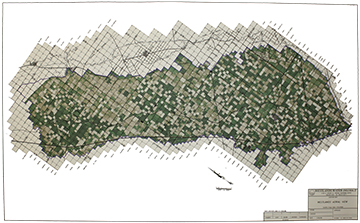
The image below shows huge swaths of fallowed farmland in Westlands Water District as a result of water supply cuts.  Unemployment in parts of the Valley reached 41 percent in August, according to the Fresno County Employment Development Department.  NASA images published recently show similar conditions as far south as Bakersfield.  It is estimated that 400,000 acres of farmland lie unplanted this year with the resulting economic impacts on the Valley’s rural communities.   High resolution version: (4 MB) click HERE.

wwd7-12-09sm.jpg

Rice and Farm Water Connection

California Rice Field

Rice is one of California’s most important crops, not only as food for human use, but rice also provides habitat and high quality food for wildlife, both native and waterfowl migrating along the Pacific Flyway.

Continue reading