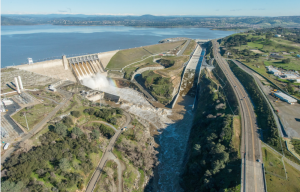
California needs to adopt a holistic approach to water policy

Moving forward, California needs to adopt a holistic approach to water policy that takes advantage of all our options. By considering just one issue at a time and focusing on a single piece of the puzzle, as we have done for decades it creates a fragmented approach to water policy, which ends up hurting everyone.

Some voices in the state seem to put their entire focus on groundwater. One such opinion piece just ran in the Los Angeles Times. That is the kind of shortsighted thinking that has plagued our water policy for years. If we have learned one thing from this historic storm season it should be that California needs to pursue every possible approach that will allow us to take advantage of wet years in order to make the dry ones a little less painful for all. According to the Wall Street Journal, “Since the beginning of the year, enough water has spilled out of California’s rain-swollen Lake Oroville to meet the demands of roughly 14 million people for a year.” Why wouldn’t we do everything possible to capture it and prepare for the future?

We also need to recognize the critical link between surface storage and groundwater storage. We agree that our groundwater supplies need to be replenished, but that happens gradually as water enters underground aquifers from the very storage projects to which many people object. Surface storage is critical to effectively manage and enhance groundwater because of its ability to slow runoff during the kinds of atmospheric river events we’ve seen this year.

Many of these same people will also tell you that farms are irresponsible water guzzlers and need to shutter operations. In this worldview, farms are using the water simply for the sake of using it. What’s missing here is that California farms turn that water into food – specifically the healthy fruits, vegetables, nuts, grains, dairy, meat and yes, wine that Californians buy every day for their families.

Future water policy must balance the interests of urban water users, farms and the environment. Working together, we can continue to share this beautiful state as we have for centuries. However if we refuse to look at the big picture and listen to those who insist on examining only one piece of the puzzle at a time, we are likely in for tougher times than necessary.

Water User Response to Bureaucratic Intrusion

Over 20 farm organizations and public water agencies reacted quickly to letters from the National Marine Fisheries Service (NMFS) that requested actions that would have slowed progress to repair infrastructure at Oroville Dam. A second letter from NMFS did little to reduce concerns over out-of-touch bureaucrats intervening in emergency operations intended to restore a significant part of California’s water supply.

Farm Organization and Public Water Agency Response (3-1-17) HERE

NMFS Initial Letter (2-24-17) HERE

NMFS Follow-up Letter (2-28-17) HERE

Out-of-Touch Federal Bureaucrats Actively Obstructing Emergency Fixes at Oroville

You can’t make this stuff up

While California water officials deal with historic flooding and neglected infrastructure as well as emergency efforts to protect people and property from the next storms, our federal bureaucracy is also hard at work. Except its hard work is directed at putting up roadblocks to the very emergency repairs California officials are rushing to complete.

Recommendations could slow recovery efforts

A four-page letter sent recently to the Federal Energy Regulatory Commission (FERC) by the National Marine Fisheries Service (NMFS) makes outrageous recommendations that will confound efforts to begin repairing the damage at Oroville Dam. FERC maintains authority over the Oroville Hydroelectric Project.

The California Department of Water Resources stopped releases from Oroville’s main spillway on Monday, February 27 in order to begin dredging soil and concrete that are blocking Oroville’s power plant. Getting the power plant back on line will help regulate releases from the dam during the remainder of the rainy season, which will enhance public safety.

Just work at night

The NMFS letter makes 22 requests that it believes would minimize the effect on anadromous fish species and habitat on the Feather River. Those recommendations include:

  • Only working on Oroville repairs at night, instead of letting repair work proceed as quickly as possible.
  • Ramping flows up and down as slowly as possible, which would inhibit the ability to get prepared for the next storms
  • Maintaining minimum flows at all times, again obstructing necessary preparations for the next wave of storms
  • Taking time away from necessary repairs to survey the locations of fish that may still be in the river, and mandating a detailed level of data-collection down to checking date, time and location stamp on cameras.
  • Requiring time taken away from emergency needs to “deploy as many people as possible” to survey fish.

Repairs must occur quickly

There are more storms on the horizon as well as a record snowpack eager to melt this spring. Time is of the essence. DWR was right to shut the spillway and begin work as soon as possible in order to begin the clean up. The 180,000 people who evacuated two weeks ago should not be held hostage to a bureaucratic process that will slow progress on repairing the storm damage.

Governor’s Call to Ensure Safety of Dams Must be Coupled with Recognition of their Value

There has been a lot of talk about dams lately and rightly so. The emergency at Oroville Dam, as well as other storm-related damage to the state’s infrastructure, reminded us of the awesome power of nature and the effort people have taken over the years to control it.
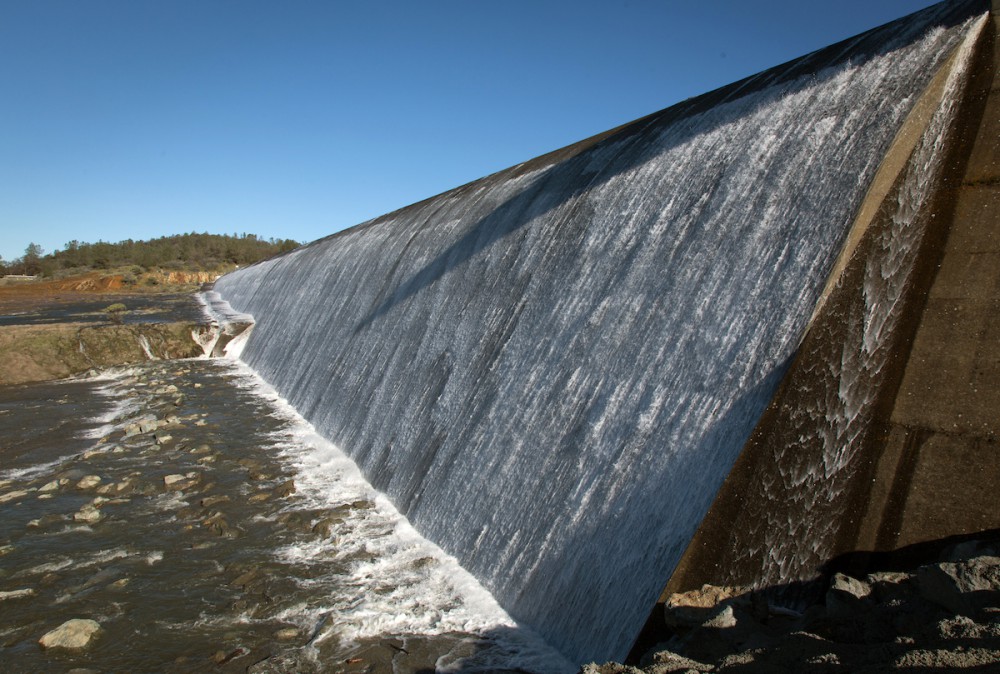
We support the Governor’s call today to improve dam safety and move forward with inspections. The inspection process should proceed carefully and be conducted in a way that protects the water collected that is helping bring the extended drought to an end. We also agree with the Governor’s request to expedite Proposition 1 funding already designated for flood control, that should help lessen the near-term challenges water managers face.

However, we profoundly disagree with irresponsible voices that want to turn the state’s emergency into an excuse to halt building new surface storage as well as shutter existing dams.

The underlying assumption is that all dams are inherently unsafe. That is simply untrue. But for all their bluster there is an inescapable truth these dam opponents can’t shake. Countless lives have been saved and an incalculable amount of property damage has been prevented by the dams that help regulate California’s uneven water supply. That alone makes them worthwhile but the benefits don’t stop there. Dams also provide us with a dependable water supply for families and farms, inexpensive power generation and recreation opportunities.

The “no-dams-ever” crowd wants you to think we must choose between surface water and ground water. That is a false, and dangerous, choice. Dams help regulate excess flows during stormy weather allowing water managers to direct stored water to facilities that help recharge our groundwater. This connection between surface and groundwater, was recognized 100 years ago when many of our current dams were planned, in part, to help end groundwater overdraft.

If we learn one lesson from this winter’s historic storms it should be that we must do everything possible to store today’s water for use tomorrow – that includes the expansion of some existing facilities as well as new projects such as Sites Reservoir and Temperance Flat. We just need to stay focused and not allow the naysayers to take advantage of the recent news to divert public attention from the real water supply and flood control needs we have.

CFWC Statement on Oroville Dam Operations

“This winter’s record-breaking storms have tested our state and its infrastructure in ways no one could have predicted.

The past week has been particularly frightening for people in and around the City of Oroville. We’d first like to say how glad we are that hundreds of thousands of people were able to safely evacuate and that the emergency spillway helped provide the necessary time to do so.

Oroville Dam Emergency Spillway

There has been a lot of finger-pointing and talk about whether the structure should have been made even stronger.

Unfortunately, facts sometimes get lost in a crisis. As was pointed out by Jeffrey Mount of the nonpartisan Public Policy Institute of California, the Oroville structures had successfully handled the big flood of 1997. The emergency spillway as well as the dam itself were re-checked and re-licensed a decade ago, and deemed safe and capable of handling what at the time, experts believed would be the worst-case scenario.

It’s also important to point out that the spillway in question was an extra precaution taken in addition to the regular overflow mechanisms. The licensing agency, the Federal Energy Regulatory Commission (FERC), even noted that in an extreme event, some erosion of the emergency spillway would be likely. In other words, it performed as expected.

California is facing an unprecedented amount of rain and snowfall this year, well above the wettest year in the state’s recorded history. Precipitation in the Northern Sierra this year is 221% above average.

We applaud the swift work of government officials, are delighted to hear the evacuees are now returning home and look forward to rolling up our sleeves and working with all involved toward an even more secure water future.”

A Standard Post


Co-working SpaceTeam fund big data prototype prototype long shadow latte big data. Innovate affordances personas user centered design paradigm user centered design innovate quantitative vs. qualitative pivot thought leader viral paradigm cortado affordances.

Continue reading

A Video Post

Co-working SpaceTeam fund big data prototype prototype long shadow latte big data. Innovate affordances personas user centered design paradigm user centered design innovate quantitative vs. qualitative pivot thought leader viral paradigm cortado affordances.

Continue reading

An Audio Post

https://soundcloud.com/designdetailsfm/30-rewarding-holding-experience-feat-didi-medina

Co-working SpaceTeam fund big data prototype prototype long shadow latte big data. Innovate affordances personas user centered design paradigm user centered design innovate quantitative vs. qualitative pivot thought leader viral paradigm cortado affordances.

Continue reading