Groundwater overdraft is a fixable problem

Groundwater overdraft is a fixable problem

Overdraft. It’s the condition in which something is being removed faster than it’s being replaced. At a bank it’s when you’re spending more money than what you have in your account. In the water world it’s much the same thing. You’re taking more water, usually out of the ground, than what is being replenished. The newest tool being used today by water managers to reverse groundwater overdraft is the Sustainable Groundwater Management Act, or SGMA, and most agree that it’s going to cause a lot of pain in the coming years.

SGMA is here to stay but what if there was another tool that could be just as effective at reversing groundwater overdraft without the expected decline in the number of irrigated farms and our rural economy? There is. And it has a successful track record in California and worked under circumstances that were far worse than they are today.

What is it? Surface water.
In 1966, according to a report goo.gl/4RjFF3 issued by the U.S. Geological Survey (USGS), groundwater pumping that year totaled 10 million acre-feet, a whopping 2/3 more than the groundwater pumped in 2015 during the worst of the drought goo.gl/hbbaho.

The report goes on to say that imported surface water supplies (from the State and federal projects) have largely replaced groundwater and that by 1973, after three decades of declining water levels, groundwater was recovering and returning to its pre subsidence levels.

Today there are a number of excellent surface water storage proposals under consideration for funding from Proposition 1, the State’s most recent water bond. A report mentioned during a water storage panel discussion at the recent Association of California Water Agencies (ACWA) Conference showed that on average there are 10 million acre-feet of surplus water available each year beyond water rights and regulatory demands. Ten million acre-feet. Every year.

Spent wisely, Proposition 1 funds can help deliver new surface water supplies to California’s most severely over drafted groundwater basins and achieve the same kind of successes that our past water leaders did, without destroying a million acres of farmland in the process.

Garden Salad Copy

[cmsms_row data_padding_bottom=”50″ data_padding_top=”0″ data_overlay_opacity=”50″ data_color_overlay=”#000000″ data_bg_parallax_ratio=”0.5″ data_bg_size=”cover” data_bg_attachment=”scroll” data_bg_repeat=”no-repeat” data_bg_position=”top center” data_bg_color=”#ffffff” data_color=”default” data_padding_right=”3″ data_padding_left=”3″ data_width=”boxed”][cmsms_column data_width=”1/1″][cmsms_heading type=”h1″ font_weight=”400″ font_style=”normal” text_align=”center” target=”self” margin_top=”0″ margin_bottom=”20″ animation_delay=”0″]Garden Salad[/cmsms_heading][cmsms_table animation_delay=”0″][cmsms_tr type=”header”][cmsms_td type=”header” align=”center”]Item[/cmsms_td][cmsms_td type=”header” align=”center”]Serving Size[/cmsms_td][cmsms_td type=”header” align=”center”]Gallons of Water[/cmsms_td][/cmsms_tr][cmsms_tr][cmsms_td align=”center”]Lettuce[/cmsms_td][cmsms_td align=”center”]3.2 ounces[/cmsms_td][cmsms_td align=”center”].91[/cmsms_td][/cmsms_tr][cmsms_tr][cmsms_td align=”center”]Tomato[/cmsms_td][cmsms_td align=”center”]5.3 ounces[/cmsms_td][cmsms_td align=”center”]4.2[/cmsms_td][/cmsms_tr][cmsms_tr][cmsms_td align=”center”]Cucumber[/cmsms_td][cmsms_td align=”center”]3.5 ounces[/cmsms_td][cmsms_td align=”center”]4.6[/cmsms_td][/cmsms_tr][cmsms_tr][cmsms_td align=”center”]Bell Peppers[/cmsms_td][cmsms_td align=”center”]5.3 ounces[/cmsms_td][cmsms_td align=”center”]3.9[/cmsms_td][/cmsms_tr][cmsms_tr][cmsms_td align=”center”]Avocado[/cmsms_td][cmsms_td align=”center”]1.1 ounces[/cmsms_td][cmsms_td align=”center”]4.5[/cmsms_td][/cmsms_tr][cmsms_tr type=”footer”][cmsms_td align=”center”]Total[/cmsms_td][cmsms_td align=”center”][/cmsms_td][cmsms_td align=”center”]16.3 gallons[/cmsms_td][/cmsms_tr][/cmsms_table][/cmsms_column][/cmsms_row]

Chicken Sandwich

[cmsms_row data_width=”boxed” data_padding_left=”3″ data_padding_right=”3″ data_color=”default” data_bg_color=”#ffffff” data_bg_position=”top center” data_bg_repeat=”no-repeat” data_bg_attachment=”scroll” data_bg_size=”cover” data_bg_parallax_ratio=”0.5″ data_color_overlay=”#000000″ data_overlay_opacity=”50″ data_padding_top=”0″ data_padding_bottom=”50″][cmsms_column data_width=”1/1″][cmsms_heading type=”h1″ font_weight=”400″ font_style=”normal” text_align=”center” target=”self” margin_top=”0″ margin_bottom=”20″ animation_delay=”0″]Chicken Sandwich[/cmsms_heading][cmsms_table animation_delay=”0″][cmsms_tr type=”header”][cmsms_td type=”header” align=”center”]Item[/cmsms_td][cmsms_td type=”header” align=”center”]Serving Size[/cmsms_td][cmsms_td type=”header” align=”center”]Gallons of Water[/cmsms_td][/cmsms_tr][cmsms_tr][cmsms_td align=”center”]Boneless chicken breast[/cmsms_td][cmsms_td align=”center”]7 ounces[/cmsms_td][cmsms_td align=”center”]141[/cmsms_td][/cmsms_tr][cmsms_tr][cmsms_td align=”center”]Dutch crunch roll[/cmsms_td][cmsms_td align=”center”]1 roll[/cmsms_td][cmsms_td align=”center”]4.2[/cmsms_td][/cmsms_tr][cmsms_tr][cmsms_td align=”center”]Cheese[/cmsms_td][cmsms_td align=”center”]1 slice[/cmsms_td][cmsms_td align=”center”]6[/cmsms_td][/cmsms_tr][cmsms_tr][cmsms_td align=”center”]Tomato[/cmsms_td][cmsms_td align=”center”]2 ounces[/cmsms_td][cmsms_td align=”center”]1.6[/cmsms_td][/cmsms_tr][cmsms_tr][cmsms_td align=”center”]Lettuce[/cmsms_td][cmsms_td align=”center”].5 cup[/cmsms_td][cmsms_td align=”center”].7[/cmsms_td][/cmsms_tr][cmsms_tr][cmsms_td align=”center”]Barbecue sauce[/cmsms_td][cmsms_td align=”center”].5 ounce[/cmsms_td][cmsms_td align=”center”]6.3[/cmsms_td][/cmsms_tr][cmsms_tr][cmsms_td align=”center”]Orange[/cmsms_td][cmsms_td align=”center”]6.25 ounces[/cmsms_td][cmsms_td align=”center”]8.2[/cmsms_td][/cmsms_tr][cmsms_tr][cmsms_td align=”center”]Water[/cmsms_td][cmsms_td align=”center”]12 fluid ounces[/cmsms_td][cmsms_td align=”center”].1 gallon[/cmsms_td][/cmsms_tr][cmsms_tr type=”footer”][cmsms_td align=”center”]Total[/cmsms_td][cmsms_td align=”center”][/cmsms_td][cmsms_td align=”center”]195 gallons[/cmsms_td][/cmsms_tr][/cmsms_table][/cmsms_column][/cmsms_row]

UC Berkeley study: Enough water for 10 million people lost every year

UC Berkeley Study Confirms: Enough water for 10 million people lost every year

A new study by Dr. David L. Sunding of U.C. Berkeley confirms the devastation done to all Californians by a broken water-management system ruled by more than 15 federal, state and local agencies.

1.3 million acre-feet lost every year

For more than 20 years of this regulatory quagmire the state has lost an average of 1.3 million acre feet of water per year by flushing it out to the ocean, enough annual supply to sustain more than 10 million Californians or grow over 21 billion salads.

Fewer California food choices, consumers expected to pay more

With 55,000 acres of farmland being fallowed each year since 2000, our ability to provide California with food that is healthy, affordable, and available is also shrinking. The new study predicts that without changes to the system, will see an additional 195,000 acres of land fallowed each year over the next 30 years, which will hit consumers squarely in the pocketbook. In addition, we may have to import more food which not only costs more, it does not carry the same safety standards as food grown here and hurts the environment.

And the negative statewide impacts don’t stop there.

Job losses mount

Job losses will continue to mount and could cost the state more than 21,000 jobs every year over the next 30 years. And while 11,000 of those jobs would be farmworkers the others include food processing jobs, truck drivers, warehouse workers and more.

The broken system has already cost urban communities more than $5 billion. If we continue down this same path, water districts are poised to spend an additional $10.1 billion over the next 30 years just to make up for water cutbacks.

We’re all grateful for this year’s wet winter, but it does not solve our long-term management problems. To do that, we must all work together using sound science and common sense to make smart choices about allocation that benefit all, including farmers, urban consumers and the environment.

Read the study HERE.

CVP Allocation Increased, But Without Fixing Broken System Californians Could Suffer Permanent Drought

central valley drought

Without Fixing Broken System Californians Could Suffer Permanent Drought

On the heels of yet another storm that brought us within .75 inches of breaking the all-time record wet year, the US Bureau of Reclamation announced 100 percent deliveries for water users south of the delta. Coming so late in the year, this usually joyful news is a bittersweet reminder of how broken California’s water system has become. Reservoirs have been essentially full since January, but with more than 15 federal, state and local agencies having jurisdictions over California water policy, the announcement was delayed until now, long after planting decisions have been made for the season.

We Are Ready to Act

For many long years, new water projects have been debated and delayed that could provide California with the water it needs. All the scientific studies have been done and the projects are ready to go. But the broken system prevents forward movement.

In 2014, voters authorized a water bond to end the delays and get started on water supply and storage projects that can meet our future needs. Two of those projects- Sites Reservoir and Temperance Flat Reservoir will not only help us meet the water supply needs of California, but will help improve ecosystem health as well. Sites Reservoir alone would yield enough water to serve almost 3 million people for a year. Temperance Flat Reservoir would add water for 1 million people or enough to grow 3 billion salads. Both projects would help refill depleted ground water supplies.

The Time to Invest is Now

All Californians want to celebrate the end of the drought and a return to normalcy, but unless we fix our broken water system California’s new normal is promising to be perpetual scarcity, shortage, fear, and doubt. If left unchanged the only thing our broken system will yield is permanent drought for all Californians. The time to invest in our future is now.

CFWC Statement on End of Drought

San Luis Reservoir, August 4, 2016
“Today the Governor declared an end to California’s drought and his administration issued plans to permanently entrench many of the drought restrictions and water use efficiency requirements it brought about.


“California farmers work every day to make the most out of every drop.  While total agricultural water use in California has remained relatively constant over the last 50 years, the amount of food we produce with that water has increased over 43 percent. Any way you look at it, that’s a pretty efficient use of resources, said Mike Wade, executive director of the California Farm Water Coalition.


“By planning to prepare for future drought the Administration recognizes that Californians can no longer rely on our broken water system to provide sufficient water to all California water users – urban, farm and environmental. Without fixing our broken system, we face the risk of permanent water shortages during even the wettest of years, and ever-escalating disaster during multi-year droughts.


“Californians have long known that our state must develop water infrastructure in smart ways to foster prosperity, avert crisis, and ensure our long-term success. In 2014 the voters overwhelmingly passed Prop 1, agreeing to spend money on badly-needed water infrastructure. And yet, projects that have been studied for years and are ready to go remain unfunded. Why? Our water management system with more than 15 overlapping federal, state, and local agencies continues to delay. Sites Reservoir and Temperance Flat alone would add enough water to meet the needs of 4.3 million people for a year or grow over 11 billion salads


“We must act now to prepare for future droughts by building integrated water storage that helps to grow our economy, protect the environment, and ensure prosperity for future generations. But fixing our broken system goes beyond our urgent need to develop these smart storage solutions. California must pursue robust, adaptive, and durable solutions to the other water management issues confronting us. Local, state, and federal agencies must adopt not only a culture of cooperation, but outcome-oriented policies that encourage responsive, efficient, and smart solutions.


“We stand ready to roll up our sleeves and work to fix the broken water management system and keep California from a state of permanent drought,” Wade said.


The best it gets? Responses to South-of-Delta CVP Allocation Announcement

South-of-Delta CVP Allocation Announcement

Many contractors in the CVP are scratching their heads at the latest USBR allocation announcement for South-of-Delta deliveries that was finally released late in the farm planning season.

In the wettest year on record, with approximately 200% of average precipitation, a lot of people are asking questions-

Why is the allocation only 65%?

Why did the announcement come so late?

If this is a record-breaking water year, what will normal years look like?

How can the system be so broken?

Read the responses from some of those impacted:

Westlands Water District

San Luis and Delta Mendota Water Authority

Watch a television interview with a farmer on the topic.


Updating the Bay-Delta Water Quality Control Plan

SWRCB updating Bay-Delta Water Quality Plan and SED

In 2016, California’s State Water Resources Control Board (SWRCB) began the process of updating the Bay-Delta Water Quality Control Plan. The public comment period officially closed at noon on March 17. (Read CFWC’s comment letter here.)

During that time, loud and sustained objections to the proposed policy have been raised.

Flow-based approaches in the past have failed

By focusing solely on the amount of water flowing through the river, the SWRCB staff proposal is relying on outdated science that has been proven ineffective at halting the decline of endangered fish populations. Incredibly, if adopted in its present form, the policy will also have a devastating impact on drinking water, sanitation needs, food production, groundwater, the economy and jobs for people stretching from the Northern San Joaquin Valley throughout the Bay Area.

That’s why this proposed regulation is opposed by schools, health departments, farmers, cities, economic development officials, and water agencies throughout the state including the Central Valley, Bay Area, Central Coast, Los Angeles, and the Inland Empire.

Opposition to SWRCB plan is growing

Opposition to this wrong-headed policy has continued to grow and now includes statewide groups like the California Chamber of Commerce and the Association of California Water Agencies, regional organizations such as the Orange County Business Council as well as hundreds of individual Californians. Not even a drought-busting water year like this one could diminish the impacts of this unequivocally bad policy.

Holistic Approach with Functional Flows, not SED Approach

What we need instead is a comprehensive, outcomes-driven, science-based, collaborative approach that includes “functional” flows as well as non-flow solutions that contribute real benefits to ecosystem recovery.

As the Board goes behind closed doors to deliberate the draft proposal we would urge them one more time to listen to the voices representing millions of Californians opposed to the plan and open the door to collaborating on a real solution.

Kern Water Bank

What is the Kern Water Bank?

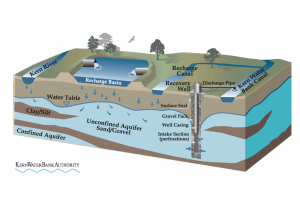
The Kern water bank is a groundwater recharge facility in Kern County. It stores water for future use that has been imported from the Kern River and other parts of the state. It is operated by an organization of public water agencies called the Kern Water Bank Authority that includes public irrigation districts, a public agency and a mutual water company.


How did the Kern Water Bank get started?

In the early 1980s, California’s Department of Water Resources began exploring the possibility of developing a State Water Project (SWP) groundwater storage facility in Kern County, which it called the Kern Water Bank. The bank was to be made up of different recharge regions across a large section of Kern County.

The largest of these regions, the Kern Fan Element, was to be developed first, followed by local projects developed in partnership with several water districts in Kern County.  In 1988, the Department purchased approximately 20,000 acres of land in Kern County.

During the late 1980s and early 1990s, the Department of Water Resources (DWR) sought to complete feasibility studies on the Kern Fan Element.  In addition to these expensive feasibility studies, DWR was confronted by legal and political challenges to developing the water bank.

In 1993, DWR recognized that changes to water management in the Sacramento-San Joaquin Rivers Delta including endangered species and water quality concerns would limit the ability to use the property as intended. Work on feasibility studies and design was stopped.

In 1994, DWR and some of the SWP Contractors involved in the project met in Monterey, CA for mediated negotiations regarding the water bank and State Water Project operations.


What is the Monterey Agreement/Amendment?

The agreement made between DWR and the SWP Contractors led to SWP contractors surrendering more than 14.6 billion gallons of water allocations (worth approximately $314 million in 2016 dollars.) The agreement, which modified the long-term contracts that cities and farms have for delivery of water from the State water Project is known as the Monterey Agreement.

Part of the Monterey Agreement included the transfer of  the land originally intended for groundwater recharge from State control to local public water agencies with the express directive that it be used for groundwater recharge.

The Monterey Agreement required that the changes be ratified by the public water agencies’ elected Boards of Directors before April of 1995.

The Monterey Amendment is the collection of changes made to the State Water Project Contracts resulting from the Monterey Agreement.

How much water can the Kern Water Bank recharge into the groundwater aquifer?

The water bank can recharge up to 72,000 acre feet per month Kern Water Bank formed after the Monterey Agreement, depiction, cutaway(756 million gallons/day) during the beginning of a recharge cycle. As soils become more saturated, the recharge rate may slow to 30,000 acre feet per month.

There is no set maximum volume that can be recharged into the aquifer on which Kern Water Bank sits, but only about 1.5 million acre feet is readily accessible to the Water Bank’s recovery wells.


What wildlife benefits does the Kern Water Bank provide?

The Kern Water Bank, occupying approximately 35 square miles, is near the Pacific Flyway and provides critical habitat for wildlife. The Water Bank  has been implementing the Kern Water Bank Habitat Conservation Plan/Natural Community Conservation Plan since 1997 in coordination with the efforts of the California Department of Fish and Wildlife and the United States Fish and Wildlife Service.

Check out this slideshow of wildlife found at Kern Water Bank.


Learn about other Groundwater recharge projects by clicking here.


Water Banks and Groundwater Recharge Projects

Water banks and groundwater recharge projects are important tools to manage California’s water supply.

California’s farmers, water managers, and many cities have long recognized the importance of groundwater recharge in helping to restore aquifers during times of water abundance to help prepare for the inevitable dry periods common in Mediterranean climates.

Water banks and groundwater recharge projects are part of integrated water storage solutions that move water from reservoirs behind dams to land that has the right geology and soils to allow for storage.

Some examples of water banks and groundwater recharge projects include:

Kern Water Bank

Consolidated Irrigation District South and Highland Basin recharge project

Deer Creek Basin and Wildlife Complex


Groundwater recharge also occurs when farmers apply water across their fields instead of using precision irrigation methods such as drip and microirrigation.

Studies are underway to improve the efficiency of this type of recharge, as it can help to meet both the needs of crops, and recharge the groundwater.