CDEC Reservoir Levels Map Copy
Securing California’s water future for farms, families and native species is possible. 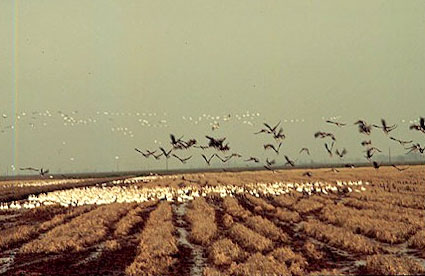 When we pursue smart policies that foster innovative solutions, everyone benefits. One example of these smart policy solutions is the use of strategically expandable floodplains found in the Central Valley Flood Protection Plan.
How can changing how we think about storm flows and floodplains improve water management for all of California? When precipitation is abundant, like this year, water managers are sometimes forced to release water from reservoirs early to be ready for possible future rain, instead of safely storing it and releasing it in ways that provide multiple benefits.
With expanded floodplains, water is allowed to overflow onto farmland that is managed in a way to accommodate higher seasonal flows. Strategically expanding floodplains onto suitable farmland helps protect levees, communities, and farms from potential flood damage. Native species are provided habitat, food, and protection, and opportunities to recharge groundwater aquifers are enhanced.
Smart policies that encourage collaborative approaches to improve how water is managed for everyone can protect communities, nurture the environment, and ensure vibrant local farms.
Learn more about how California’s farmers in the Sacramento Valley are working on innovative ways to improve water management in this Sacramento Bee piece on floodplains.
A recent San Jose Mercury editorial on Assemblyman Adam Gray’s AB 313 is an over-the-top attack on farms that grow a sizeable portion of the nation’s food. The bill, which has passed both the California Assembly and Senate, allows for an administrative law judge to review water rights decisions by the State Water Resources Control Board if the affected party appeals the Board’s decision. AB 313 is awaiting Governor Brown’s signature.
The Mercury’s editorial claims that AB 313 would hand more power over to “Big Ag.” Few things in California water get trotted out as frequently as the bogeyman of “Big Ag”. After all, who would want to support policies that will benefit some deplorable, like “Big Ag?” It’s a loaded term meant to conjure images of monolithic, faceless industry.
The trouble is- California’s not a “Big Ag” state.
No story is complete without a villain, and the menacing threat of “Big Ag” has long been a popular one, even if it’s nothing but smoke and mirrors.
California’s water will always be a contentious issue. Ensuring that conflicts are resolved fairly and impartially is a worthy goal of any government.
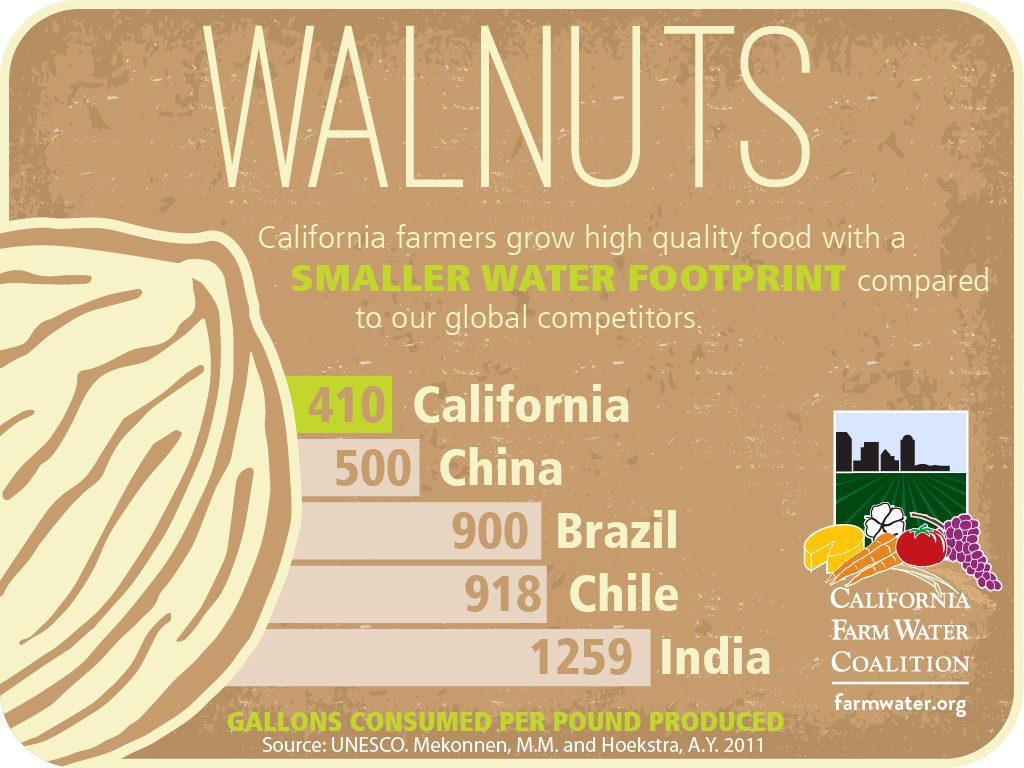
Improving the water footprint in food production, or put another way, improving water use efficiency, is a priority for California’s farmers. Our farmers are dedicated to producing affordable, local farm products as efficiently as possible.
Compared to many of our major trade partners, many locally-produced farm products require less water to produce. California’s farmers have long been early adopters of innovative farm technologies and techniques that help them produce more crop per drop of water.
Good stewardship of California’s precious water and soils is central to the livelihoods of farmers, who recognize that a bountiful California is important not only for their success, but also for future generations.
Producing affordable, local farm products while working to reduce the water footprint of California-grown foods and fibers is a worthy goal. Learn more about some of the innovations in farm water management that are helping farmers achieve success.